
Review · TOKYO
Tokyo Ikebana Wellness Art Experience near Shinjuku
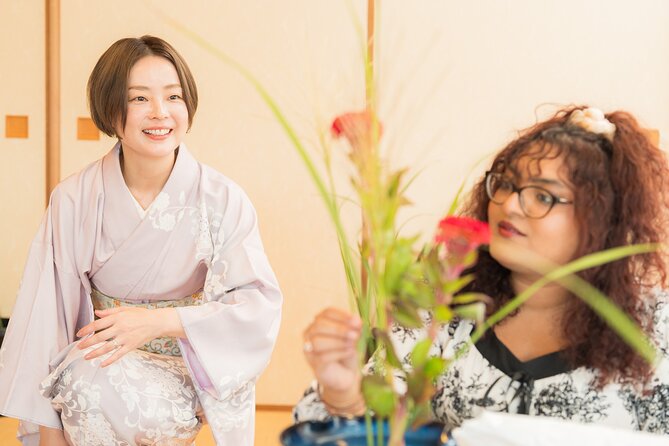
Flowers can change the pace of a Tokyo day. This 90-minute beginner-friendly ikebana workshop combines a short cultural lesson with hands-on practice, giving you a calm break from the city and a handmade keepsake to enjoy afterward. I especially like the small maximum of five people and the patient English guidance from Ai-sensei. The main point to consider is the location: it is in Nakano, not central Shinjuku, so you will need to allow time to reach the meeting point.
I also like that you do not simply watch a demonstration. You work with seasonal flowers and branches, make your own choices, and take the finished arrangement with you. The only real limitation is the strict non-refundable policy, so you should book this activity only when your plans are firm.
Key points at a glance
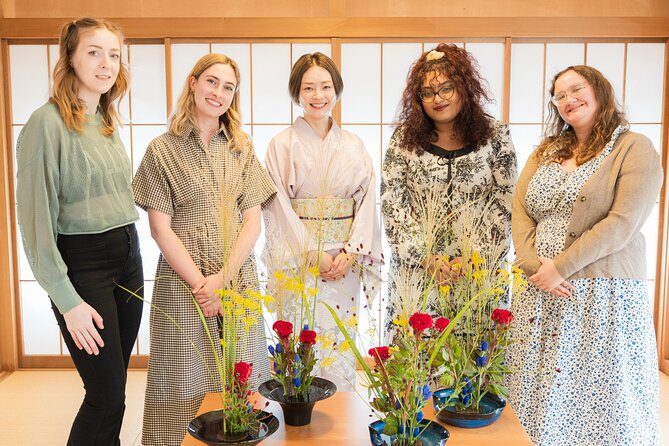
- A small group of no more than five: You receive personal help instead of trying to follow a crowded class.
- A 1:00 pm start near Nakano: The timing fits neatly into an afternoon of sightseeing, but the address is outside Shinjuku proper.
- A 600-year-old Japanese art: You learn the background, styles, tools, vases, and basic principles before arranging flowers.
- English guidance from Ai-sensei: Beginners can ask questions and receive direct advice on balance, branch direction, height, and leaf placement.
- Your arrangement goes home with you: You can enjoy it in your hotel room or continue caring for it after the class.
- A peaceful Japanese-style setting: The room itself adds to the sense of occasion and gives the activity a quiet, traditional feel.
Why this short class works well in Tokyo
Tokyo offers endless ways to fill a day, but many sightseeing plans become a race between stations, shopping streets, temples, and restaurants. Ikebana gives you something different: a quiet hour and a half focused on shape, space, flowers, and concentration.
You do not need artistic training. You also do not need to know Japanese etiquette or the formal rules of flower arrangement before arriving. The workshop begins with the basics, so you can approach the flowers without worrying about doing something embarrassing.
That matters because ikebana can look formal from the outside. A vase, a few branches, and carefully placed blooms may seem simple, but the balance takes thought. The class makes that process approachable by showing you how small changes can alter the entire arrangement. Raise a flower, remove a leaf, or turn a branch, and the shape may feel completely different.
I see this as a good choice for anyone who wants more than a photograph of Japan. You leave with a better understanding of one traditional art form and a piece of your own work. The result may not look like a professional arrangement, but that is part of the charm. The goal is to notice the character of each flower and make deliberate choices.
A few more spa visits around Japan worth a look
- Tokyo: Japanese Massage – Kangfu Beauty & Body Care Salon
★ 4.4 · 43 reviews - Osaka Temple Head Spa &Matcha Facial – Refresh & Glow〈90min〉
★ 5.0 · 24 reviews - Experience Award-Winning Spa Treatments in Downtown Tokyo
★ 5.0 · 21 reviews
Arriving in Nakano for the 1:00 pm start
The meeting point is at Japan, 164-0001 Tokyo, Nakano City, Nakano, 3-chōme 8, M SQUARE. The experience ends at the same place.
The description places the workshop near public transportation, which makes it practical to reach, but do not confuse the wording near Shinjuku with being inside the Shinjuku sightseeing district. Nakano is a separate part of Tokyo. If you are staying around Shinjuku, plan your route in advance and leave enough time to find the building.
The 1:00 pm start is useful. You can have a relaxed morning, eat lunch, and then attend the class without sacrificing an early sightseeing stop. Afterward, you still have the afternoon and evening for dinner, shopping, or more exploring.
The address deserves careful attention because Tokyo buildings can share similar names and streets may be busy. Keep your mobile ticket available, and check the exact meeting details before setting out. Confirmation is provided at booking, and the activity uses a mobile ticket.
The opening lesson: ikebana beyond putting flowers in a vase
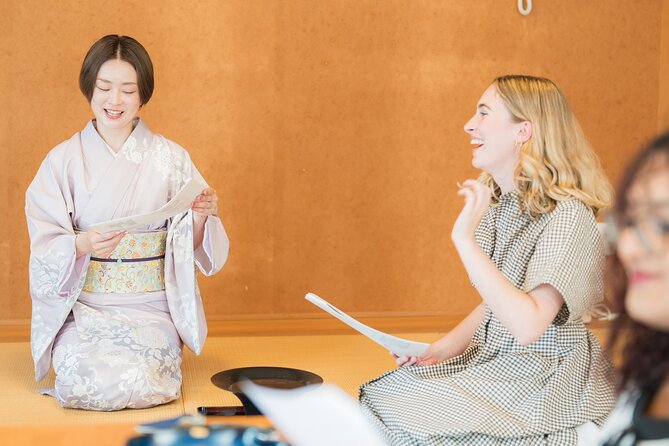
The class begins with an introduction to ikebana, including its roughly 600-year history and cultural background. You also see photographs of the instructor’s work, which helps set a visual reference before you start making your own arrangement.
This opening is short enough to keep the session active, but it adds useful context. You learn that ikebana is not simply about filling a container with attractive flowers. The form depends on space, line, direction, proportion, and the natural character of the plant material.
The instruction also covers flower vases, tools, basic styles, and the fundamentals of how to arrange flowers. The practical value is clear: when you understand why a branch is angled or why a leaf is removed, the activity becomes easier to follow.
Several people who had never tried ikebana before found this explanation reassuring. The art initially seemed difficult or too formal, but the introduction broke it into manageable steps. That is exactly what a first class should do.
The cultural setting adds to the lesson. The workshop takes place in a Japanese-style room described as bright, clean, and comfortable. You are not simply sitting in a generic craft studio. The setting helps you pay attention and makes the class feel connected to Japanese culture.
Choosing flowers, branches, and a personal shape
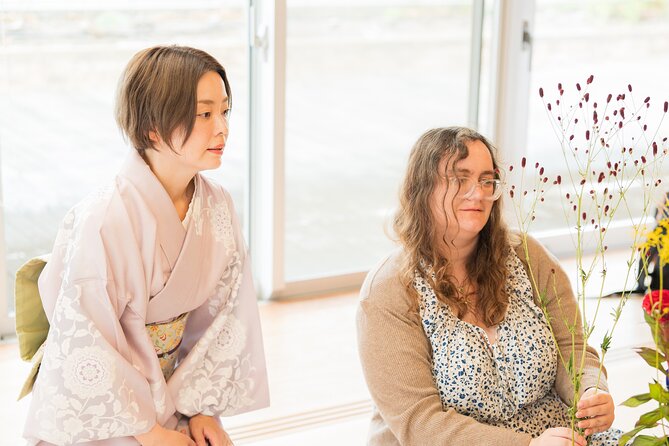
The hands-on section is the heart of the experience. You work with the flowers and branches provided that day, then decide how to combine them under the instructor’s direction.
The material changes with the season, which means the class will not feel identical throughout the year. You might work with different colors, shapes, textures, or branch structures depending on when you visit. The seasonal element is important in Japanese flower art because it connects the arrangement to the time of year.
Ai-sensei guides you through the process rather than simply showing you a finished example. You learn how to handle the stems, where to cut, and how to consider the direction of each branch. Advice may focus on the height of a chrysanthemum, the angle of a branch, or whether one leaf helps or distracts from the shape.
This direct coaching is especially valuable for beginners. You can begin with an idea in your head, then test it against the actual flowers. If something looks unbalanced, the instructor helps you adjust it without taking over the work.
The small group size helps here. With no more than five participants, the teacher can look closely at each arrangement and offer individual suggestions. You are not left waiting for help while a large class moves ahead.
One of the most enjoyable parts is seeing how different the final arrangements can look, even when everyone begins with the same number of flowers. That difference is not a problem to correct. It is part of ikebana’s appeal. Your choices reveal your sense of space and balance.
Same place, a different way to unwind:
- Osaka: Tennen Onsen Naniwa-no-Yu, the famous hot spring spa
★ 4.7 · 19 reviews - Osaka Temple :Warm Bamboo Oil Massage – Deep Restore〈60min〉
★ 4.9 · 19 reviews - Osaka Temple :Warm Bamboo Oil Massage – Deep Restore〈90min〉
★ 5.0 · 14 reviews - Osaka: Japanese Zen Massage and Facial at the Temple/180-min
★ 4.8 · 10 reviews
What makes the class feel calming
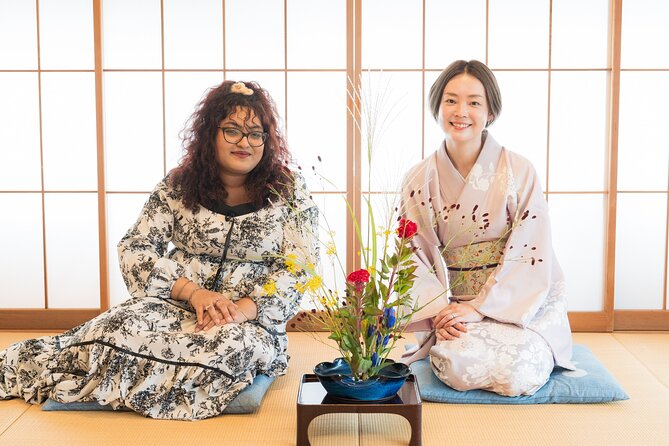
The name includes wellness art, and the description is fair to that idea. The class is not presented as medical treatment, and you should not book it expecting therapy in a clinical sense. The calming effect comes from focusing your attention on simple, physical decisions.
You trim a stem. You examine a leaf. You change the direction of a branch. You pause and look again.
That pace can feel very different from a normal Tokyo afternoon. The city outside may be noisy and fast, while the class asks you to notice small details. Several participants described the session as peaceful, refreshing, and meaningful because they could concentrate on the flowers without pressure.
I particularly like that the instructor respects each person’s image of what the arrangement should become. You receive rules and advice, but you still have room to make something personal. This keeps the class from feeling like a rigid lesson where everyone must produce the same design.
The Japanese-style room also supports the mood. A clean, open setting with flowers and careful movements gives the workshop a sense of ceremony without making it intimidating. You get a taste of traditional culture without committing to a long formal course.
Taking your arrangement back to your hotel
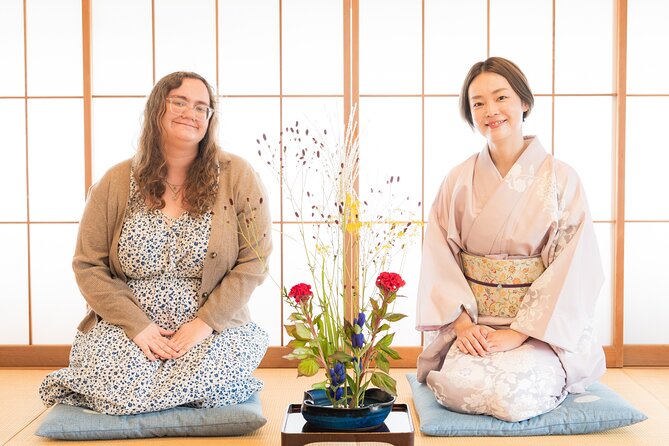
At the end, you take your arrangement with you. This is a real benefit, especially at the price of $52.71 per person. You are not paying only for a demonstration or a few photographs. You receive instruction, flower materials, use of the equipment during the class, and a finished piece to enjoy during your stay.
The arrangement makes a pleasant hotel-room display. It also gives you a reason to continue observing how flowers change over the next day or two. Some participants took the flowers home and continued enjoying them there, while others planned to use their new skills with flowers and vases at home.
You should remember that fresh flowers are not the easiest souvenir. If you have a packed schedule or plan to move hotels several times, carrying an arrangement may take a little care. Still, the short-term enjoyment is part of what makes the workshop memorable.
The take-home result also gives the class a stronger connection to your trip. Instead of leaving with another mass-produced item, you have something you made while learning about Japan. It may be modest, but it carries a personal memory.
Price, group size, and overall value
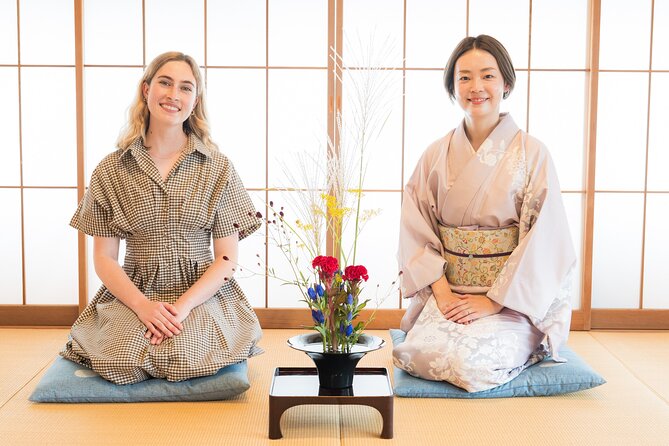
At $52.71 per person, this is not the cheapest activity you can add to a Tokyo schedule. It is also not an unreasonable price for a private-feeling cultural workshop with a maximum of five people, personal instruction, flower materials, and a take-home arrangement.
The value depends on what you want. If you are looking for a fast attraction with a dramatic view or a long list of included stops, this is not the right choice. The experience is quiet and focused. Its reward comes from participation, not spectacle.
I think the small group is the strongest part of the price calculation. A large class could offer the same basic introduction, but you would receive less individual advice. Here, the instructor can help you adjust the details that make an arrangement work.
The average booking time is 22 days in advance, so planning ahead is sensible. That is especially true if your schedule includes only a few days in Tokyo. Since the activity is limited to five people and begins at one fixed time, last-minute availability may be limited.
The non-refundable policy is the main financial risk. You cannot receive a refund or change the booking for any reason after cancellation or amendment. Check your Tokyo plans carefully before paying.
Who will enjoy this ikebana experience most
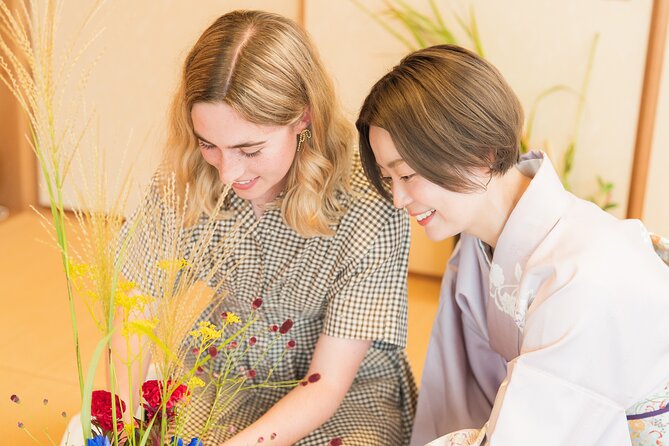
This class suits first-time participants best. You do not need previous flower-arranging experience, and the instruction begins with the history, tools, styles, and basic process.
It also works well for:
- Couples or friends seeking a quieter shared activity
- Families with older children who can follow careful instructions
- Solo visitors who enjoy creative work in a small group
- People interested in Japanese culture beyond temples and food
- Anyone who wants a useful break from shopping and crowded sightseeing
- Visitors who like seasonal flowers and want a handmade keepsake
You do not need to be especially artistic. In fact, the class may be more enjoyable if you arrive without a fixed idea of what your arrangement must look like. Let the flowers guide some of your choices, then use the instructor’s suggestions to bring the shape into balance.
The activity may be less suitable if you need a highly flexible schedule or dislike handling plant material. It is also not the best match if you want a large-scale performance or a long tour through several Tokyo sights.
Practical advice before you book
Use the exact meeting point rather than relying on a general Shinjuku map pin. The experience takes place in Nakano, and the address is M SQUARE in Nakano City.
Arrive ready to focus. You do not need special preparation, passport details, or flight information if you are already in Japan. If the booking form asks for those details, enter N/A as instructed.
Wear something that lets you sit and work comfortably. The supplied information does not state a dress code, so there is no reason to treat this as a formal ceremony. Still, ikebana involves flowers, stems, and tools, so practical clothing makes sense.
If you are booking from outside Japan, the form may request passport number or flight information. People already in Japan do not need to provide those details and should use N/A in the relevant fields.
Keep your mobile ticket easy to access. The experience is near public transportation, and confirmation arrives at booking.
Should you book this Tokyo flower workshop?
Book it if you want a small, calm, hands-on introduction to Japanese culture. The strongest reasons are the personal attention, Ai-sensei’s clear English guidance, the attractive Japanese-style room, and the chance to take your own arrangement away.
The workshop is particularly good for a first encounter with ikebana. It removes the fear that the art is too difficult, while still giving you a sense of its discipline and beauty. You will learn why branch direction, leaf placement, height, and empty space matter.
Skip it if your Tokyo schedule is too uncertain for a fixed 1:00 pm appointment, if Nakano is inconvenient, or if the non-refundable rule makes you uncomfortable. For everyone else, $52.71 buys a thoughtful cultural activity rather than a passive stop. You leave with flowers, new skills, and a better eye for the quiet design choices that shape Japanese art.
FAQ
Where does the ikebana experience take place?
It takes place at Japan, 164-0001 Tokyo, Nakano City, Nakano, 3-chōme 8, M SQUARE. The activity is near public transportation and ends at the same meeting point.
What time does the class begin?
The scheduled start time is 1:00 pm.
How long does the experience last?
The class lasts approximately 1 hour and 30 minutes.
Is previous ikebana experience required?
No. The activity is designed for beginners, and no previous experience is needed.
How many people can join?
The maximum group size is five participants.
Can I take my flower arrangement with me?
Yes. You can take your finished arrangement with you and enjoy it during your stay, including in your hotel room.
Do people already in Japan need to provide passport or flight details?
No. If those details are requested during booking, people already in Japan should enter N/A in the relevant fields.
Just added around Japan
- Onsen Spa in Tokyo and Asakusa Bar Hopping with Local Guide★ 5.0 · 3 reviews
- Japanese Head Onsen and Scalp Massage Retreat in Tokyo★ 4.5 · 2 reviews
- Aroma Massage with cherry blossom infused oil★ 5.0 · 5 reviews
- Authentic Japanese Massage Experience★ 5.0 · 2 reviews
- [Japan Wellness] Zen Meditation and Temple Tour in Matsushima★ 5.0 · 9 reviews
- Wellness in Saitama: Takedera Blowing Zen Meditation & Hot Spring★ 5.0 · 2 reviews
- Osaka Reiki Healing and Aroma Massage At The Temple<120min>★ 5.0 · 2 reviews
- ZEN therapy | Shiatsu-style massage, EnergyTherapy & Japanese Tea★ 5.0 · 5 reviews
Tokyo Massage and Spa, compared.
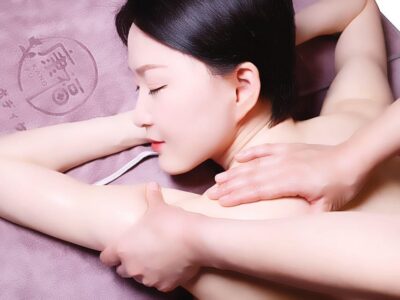
Tokyo: Japanese Massage – Kangfu Beauty & Body Care Salon
Read our review →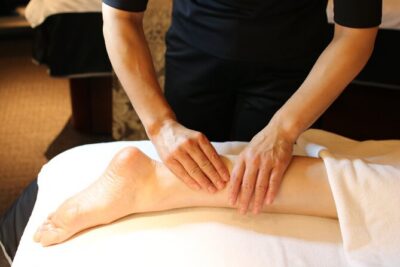
Experience Award-Winning Spa Treatments in Downtown Tokyo
Read our review →
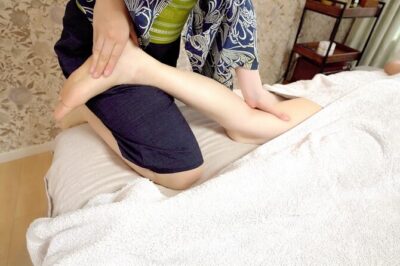

Onsen Spa in Tokyo and Asakusa Bar Hopping with Local Guide
Read our review →Onsen Spa in Tokyo and Asakusa Bar Hopping with Local Guide
Read our review →
Tokyo: Japanese Spa & Sento Experience with Local
Read our review →
Where else this treatment appears