Review · BANGKOK
Advanced Thai Massage Technique Workshop
Thai massage uses your whole body. This Bangkok workshop makes that idea practical, with hands-on work in pressing, leaning, rolling, rocking, squeezing, and circling. I like the step-by-step practice from back to front and the clear focus on body position, since good technique depends on more than strong hands. I also like that solo participants can join without needing to find a partner.
The main consideration is location. The class meets in Srinagarindra, away from Bangkok’s best-known central sights, so you will need to plan your trip to 6 Soi Srinagarindra 43. At $48.83 for about two hours, it offers solid value for anyone who wants practical instruction rather than a spa treatment, but it is not a full professional certification course.
Key points at a glance
- Small class of no more than 12 people: The limited group size should give you room to watch the instructor and practice without feeling lost in a crowd.
- Hands-on work on both sides of the body: You learn a sequence from the back to the front, rather than only watching a demonstration.
- Sen Sib theory included: The workshop introduces the traditional Thai massage idea of ten main energy lines.
- You learn to use body weight: Pressing, leaning, rocking, and rolling are central, helping you work with control instead of relying on arm strength.
- Solo participants are welcome: The instructor can act as your practice partner if you come alone.
- Two hours at $48.83: This is a practical introduction, best suited to curious beginners and massage fans rather than people seeking a long professional course.
What this Bangkok Thai massage workshop actually teaches
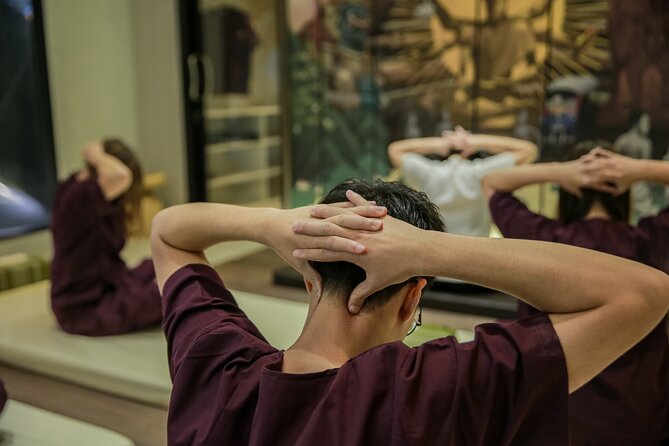
The name Advanced Thai Massage Technique may sound aimed only at experienced practitioners. The description makes the focus clearer: you study the fundamentals of how Thai massage works on another person, with added attention to signature techniques and efficient body positioning.
That distinction matters. You are not simply booking a massage. You are learning how to give one.
The workshop covers pressing, leaning, rolling, rocking, squeezing, and circling. These movements form the working vocabulary of Thai massage. Instead of keeping your hands busy with a long list of isolated strokes, you learn how different kinds of pressure and motion affect the person receiving the massage.
I like this practical approach. Thai massage is often associated with stretching and unusual body positions, but efficient pressure begins with the practitioner’s own stance. If you lean correctly, your body weight helps create pressure. If you position yourself poorly, your arms and shoulders do too much work.
The class also introduces the theory of Sen Sib. In traditional Thai massage, Sen Sib refers to ten main energy lines. The workshop connects that theory with physical practice, so you are not only copying movements without context.
Do not expect a medical course or a formal qualification from a two-hour class. The useful result is a working introduction to the principles, gestures, and sequence of Thai massage. You leave with a better sense of how the technique is built.
More Traditional Massages in Bangkok
- Bangkok: Wat Pho Thai Massage in Your Hotel Room
★ 4.6 · 68 reviews - Rest And Relax Massage – Traditional Thai Massage In Bangkok / Sukhumvit
★ 4.5 · 45 reviews - Hands-on Authentic Thai Massage Workshop
★ 5.0 · 45 reviews
The 1:30 pm start at Massage by Master99
The workshop begins at 1:30 pm at Massage by Master99, 6 Soi Srinagarindra 43, Nong Bon, Prawet, Bangkok 10250. The activity also ends at this meeting point.
The location is near public transportation, which helps, but Srinagarindra is not the same area as the Grand Palace, Wat Pho, or the riverside hotel zone. You should allow enough time to reach the address and avoid treating this as an easy walk-in stop between central Bangkok attractions.
A 1:30 pm start is useful for a relaxed afternoon plan. You can arrange lunch first, attend the class, and still have time afterward for another Bangkok activity. The schedule also avoids an early morning rush, though Bangkok traffic can still affect your arrival time.
The mobile ticket is convenient. Keep the booking available on your phone so you can present it at the meeting point. Confirmation is provided at booking.
A small class makes the practical work easier
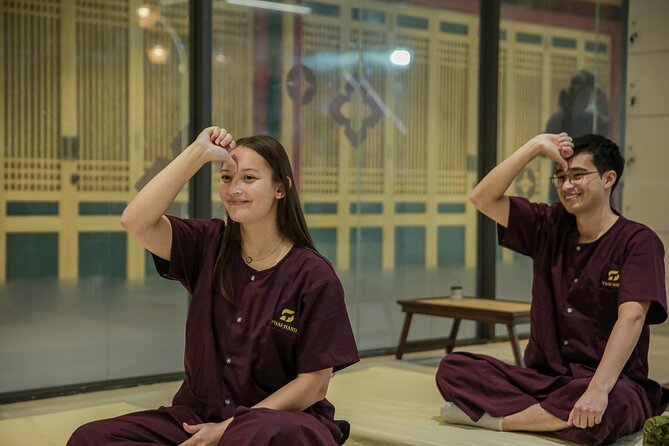
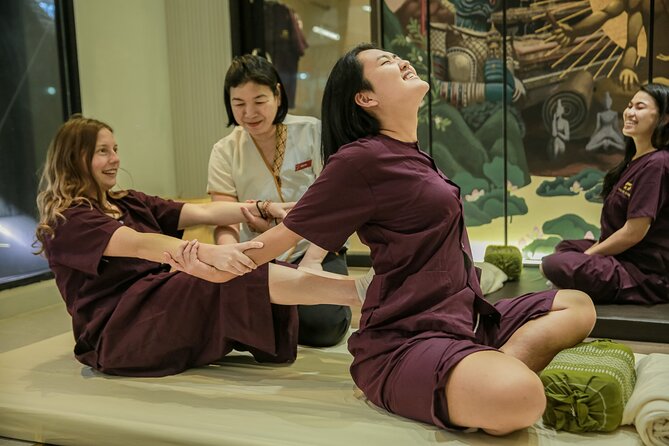
The maximum group size is 12 people. That is not a private lesson, but it is small enough to make a real difference during demonstrations and practice.
Massage instruction works best when you can see the instructor’s hand placement and body angle. In a large room, small details disappear. A group capped at 12 gives you a better chance to follow each movement and ask for correction if your position feels awkward.
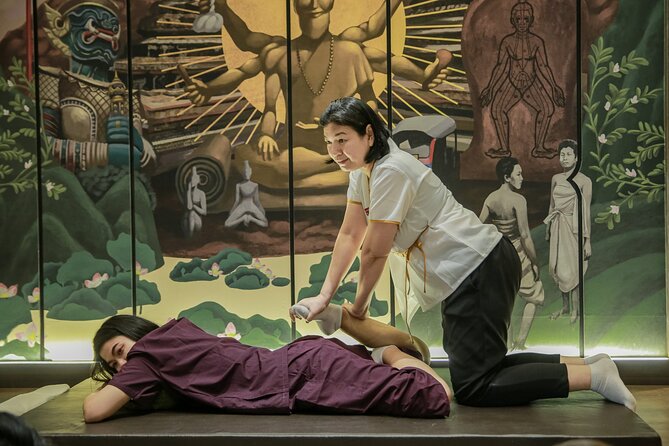
The most useful part of the class is likely the practice with a partner. You work through the techniques on both the back and front of the body, following the instructor step by step. This gives you more than a visual memory of the movement. You begin to understand how much pressure is comfortable and how a change in angle alters the technique.
A small group does not guarantee constant one-to-one attention, so keep your expectations sensible. The teacher must divide time among the participants. Still, the size is well suited to an introductory workshop and should feel more personal than a large demonstration class.
Solo participants do not need to arrange a partner
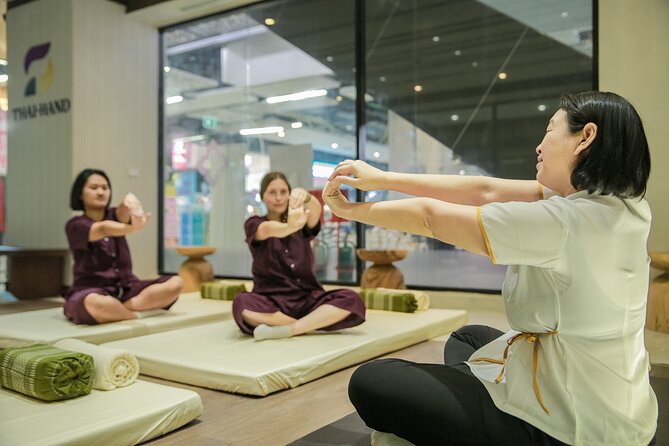
Coming alone is specifically allowed. If you do not have a companion, the instructor can act as your partner while you practice.
That is an important detail because partner-based workshops can be inconvenient for solo visitors. You do not need to persuade a stranger to join you or risk arriving without someone to work with. The arrangement also means the instructor can demonstrate directly while you practice.
If you come with a friend, you can work together and take turns giving and receiving the techniques. That may make the class more social and help you compare how the movements feel on each side.
The practice is reciprocal, so you should be comfortable participating actively. This is not a class where you lie down and receive a two-hour treatment. You will be learning through movement, touch, and repetition.
More Traditional Massages in Thailand
- Luxury So Thai Spa Package (4 Hours)
★ 4.5 · 18 reviews - Bangkok: Dream House Thai Massage Langsuan Branch E-Voucher
★ 4.1 · 4 reviews - Rest And Relax Massage – Rejuvenate Thai Massage With Herbal Hot Compress
★ 5.0 · 2 reviews - 1 Hour Deep Tissue Thai Massage with Balm – Free Transportation
★ 5.0 · 64 reviews
Why body position matters more than brute force
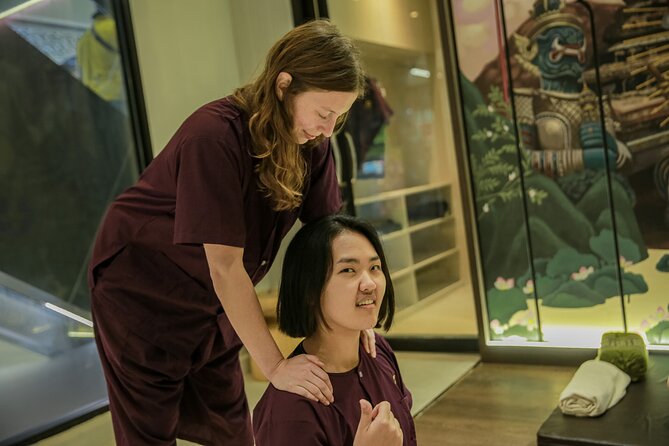
One of the strongest features of this workshop is its attention to positioning. You learn how to place your own body and use body gestures to apply pressure efficiently.
That lesson is valuable for beginners. Many people assume massage depends mainly on strong fingers or hands. Thai massage often makes better use of the practitioner’s weight, balance, knees, hands, and overall stance. Leaning can produce steady pressure with less strain than pushing from the arms.
The workshop includes bending and kneading, along with pressing, rocking, and rolling. These techniques can look simple when demonstrated, but the quality depends on rhythm and control. A good instructor can show you how to move gradually instead of dropping weight suddenly.
The supplied feedback gives this part of the class particular weight. The teacher was praised for patience and for showing every step from the back to the front. That is exactly the support you want in a technique workshop. You need time to see the movement, try it, and adjust it without being rushed.
Still, I would treat the class as a foundation. Two hours is enough to learn a sequence and understand the main ideas. It is not enough to master every technique or develop the judgement needed for professional practice.
Following the sequence from back to front
The workshop takes you through a full partner massage sequence, beginning with the back and continuing to the front of the body.
Starting with the back makes sense for a teaching session. It gives you a broad area on which to practice pressure and movement before moving to more varied techniques. You can focus on how to place your hands, how to lean, and how to keep your body aligned.
The front of the body adds another stage of learning. You must pay closer attention to positioning and pressure, and the instructor’s step-by-step guidance becomes especially important. The class description does not provide a minute-by-minute schedule, so you should not expect a fixed list of timed stops. Think of it as a guided sequence rather than a sightseeing itinerary.
The head-to-toe emphasis is useful because it shows how Thai massage can work as a connected practice. You learn signature techniques across the body instead of practicing one isolated movement. That wider range is one reason the workshop may appeal to people who already enjoy Thai massage and want to understand what happens on the practitioner’s side.
Understanding Sen Sib without overcomplicating it
Sen Sib theory gives the physical techniques a traditional framework. You are introduced to the concept of ten main energy lines and learn how it relates to Thai massage.
For a short workshop, the theory is best approached as a working introduction. You are unlikely to cover every detail of Thai medical tradition in two hours, and the available information does not promise that. What you can gain is a basic vocabulary for understanding why Thai massage is organized around lines, pressure, and connected movement.
I appreciate that the theory is included rather than ignored. Without some background, a massage sequence can feel like a collection of gestures. Sen Sib gives you a way to think about the structure behind those gestures.
At the same time, you should keep your expectations grounded. This is not presented as a substitute for a longer study program, clinical training, or professional license. It is a compact lesson that connects traditional ideas with hands-on practice.
What the $48.83 price gets you
At $48.83 per person, the workshop sits in a reasonable range for a two-hour practical activity in Bangkok. Its value comes from participation, not from luxury surroundings or a long list of extras.
You are paying for instruction, guided partner practice, access to the techniques, and the chance to work through the sequence under supervision. The small group limit also supports the price. A class of up to 12 gives the teacher a workable setting for demonstrations and basic corrections.
The price is less compelling if you only want to relax. A regular massage would better match that goal. This class asks you to pay attention, practice movements, and take part physically.
For someone curious about Thai massage, the cost compares well with the benefit of learning techniques you can continue to study later. For a professional massage practitioner, it may be too short and too introductory to meet serious training needs.
Who will get the most from the class
I would recommend this workshop to several kinds of people:
- You enjoy Thai massage and want to understand how it is performed.
- You want a hands-on activity rather than another sightseeing stop.
- You are traveling alone and need a class that can provide a partner.
- You are visiting Bangkok with a friend and want to learn together.
- You are beginning to study massage and want a practical introduction to Thai methods.
- You value a small class more than a polished spa setting.
I would be more cautious if you have no interest in practicing on another person. The central activity is partner work, and the class is built around giving as well as receiving massage.
I would also avoid booking it as a professional qualification. The title uses the word advanced, but the stated content centers on fundamental methods, body positioning, Sen Sib theory, and signature techniques. That makes it suitable for motivated beginners and massage enthusiasts, not necessarily for trained practitioners seeking advanced certification.
Timing, transport, and booking advice
Plan to arrive at the stated meeting point before the 1:30 pm start. The activity runs for about two hours and finishes where it begins, so you can organize your afternoon around a predictable return point.
The location is near public transportation, but the address is in Srinagarindra, in the Nong Bon area of Prawet. Check your route before leaving, especially if you are staying in central Bangkok. The practical issue is not the class itself. It is giving yourself enough time to reach this part of the city.
The experience accepts mobile tickets and confirmation arrives at booking. The booking pattern suggests people often reserve around 21 days ahead, so advance planning is sensible if your Bangkok dates are fixed. The group limit of 12 may also make early booking worthwhile.
Cancellation is flexible up to 24 hours before the start time, when you can receive a full refund. Within 24 hours, the payment is not refunded and changes are not accepted.
Should you book this Thai massage workshop?
Book it if you want to learn by doing. The strongest reasons are the patient, step-by-step teaching, practice on both the back and front of the body, the Sen Sib introduction, and the option for the instructor to serve as your partner.
The main trade-off is travel time to Srinagarindra and the short format. You will not become a Thai massage professional in two hours, and you should not book this expecting a passive spa treatment.
For $48.83, I think it is a good choice for a curious beginner, a solo visitor, or anyone who wants a more active Bangkok experience. If you want quiet relaxation, choose a massage instead. If you want a practical first lesson in Thai technique, this workshop earns serious consideration.
FAQ
Where does the Advanced Thai Massage Technique Workshop meet?
It meets at Massage by Master99, 6 Soi Srinagarindra 43, Khwaeng Nong Bon, Khet Prawet, Krung Thep Maha Nakhon 10250, Thailand.
What time does the workshop start?
The workshop starts at 1:30 pm.
How long does the experience last?
The workshop lasts approximately two hours.
Where does the activity end?
The activity ends back at the original meeting point.
Can I attend without a partner?
Yes. Solo participants are welcome, and the instructor can act as your practice partner.
How many people can join the workshop?
The maximum group size is 12 people.
What is the cancellation policy?
You can cancel at least 24 hours before the start time for a full refund. Cancellations and changes made within 24 hours are not accepted, and the amount paid is not refunded.
More Workshops in Bangkok
- Ubud: Wellness Retreat with Massage, Yoga Class, and Lunch
★ 4.8 · 93 reviews - Marrakech Hammam, Massage & Berber Carpet Weaving Workshop
★ 4.6 · 48 reviews - Local Ghanaian Cooking Class in Accra to help support wellness community center
★ 4.5 · 22 reviews - Beach day experience + Mexican Cooking Class + Massage
★ 4.5 · 21 reviews
Just added around Bangkok
- re:leaf spa and massage★ 4.0 · 10 reviews
- Private Thai Warrior Massage Experience★ 4.5 · 3 reviews
- So Thai Relax Spa And Massage Package (2 Hours)★ 5.0 · 2 reviews
- Fun Tuk Tuk Dinner and Massage in Old Town Bangkok★ 5.0 · 7 reviews
- Rest And Relax Massage – Rejuvenate Thai Massage With Herbal Hot Compress★ 5.0 · 2 reviews
- So Thai Luxury Spa And Massage Package (4 Hours)★ 4.5 · 2 reviews
- Ultimate Spa Experience at Su Esthetic in Bangkok (2 hours)★ 5.0 · 25 reviews
- Hot Oil Massage (2hours)★ 5.0 · 3 reviews
Bangkok Massage and Spa, compared.
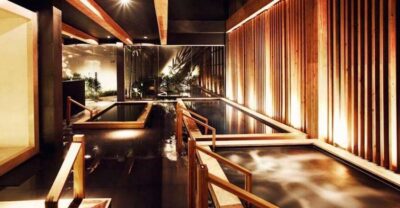
Bangkok: All-Day Pass to Yunomori Sathorn Onsen Bath and Spa
Read our review →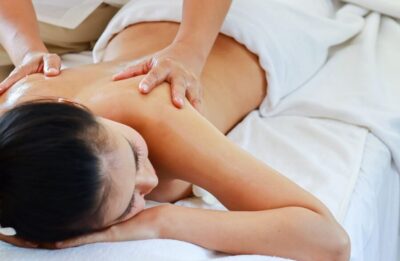
Bangkok: Wat Pho Thai Massage in Your Hotel Room
Read our review →
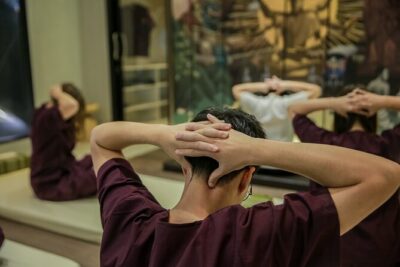

Rest And Relax Massage – Traditional Thai Massage In Bangkok / Sukhumvit
Read our review →
Bangkok: Yunomori Sukhumvit Onsen Hot Springs Spa Pass
Read our review →
Ultimate Spa Experience at Su Esthetic in Bangkok (2 hours)
Read our review →