
Review · NEPAL
7 Days Thai Yoga Massage Training and Retreat in Begnas Nepal
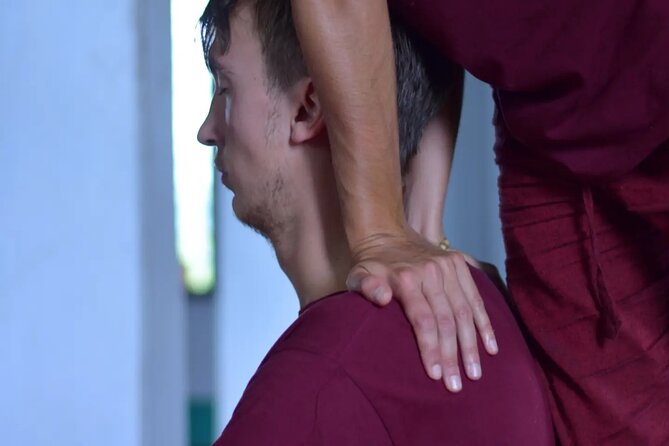
Thai massage asks you to slow down. This seven-day course in Pokhara pairs hands-on bodywork with yoga, meditation, and lessons on the body’s energy lines, known as Nadis. I like the five to six hours of daily practice, and I like that the course is small enough to allow close guidance, with a maximum of 20 people.
I also appreciate the practical finish: you receive course books and a certificate, while drinks and refreshments are included. The main drawback is clear: the $487 price does not include food, lodging, or transport, so your real budget will be higher. Also, the title refers to Begnas, but the stated meeting point is in Lakeside, Pokhara, so confirm the exact venue before booking.
Key points to know before you book
- Five to six hours of practice each day: Expect a serious course, not a light holiday workshop.
- Thai massage, yoga, and meditation together: The teaching connects body movement, breath, awareness, and Nadis.
- Instruction from Raj and his family team: Raj is described as patient and clear, with help from his sister, brother, or an assistant depending on the session.
- A maximum of 20 participants: The group limit should help with demonstrations and hands-on correction.
- Books and a certificate included: You leave with written material and proof of completion.
- Bring a separate budget for daily life: Food, accommodation, and all travel tickets are extra.
What this seven-day course is really about
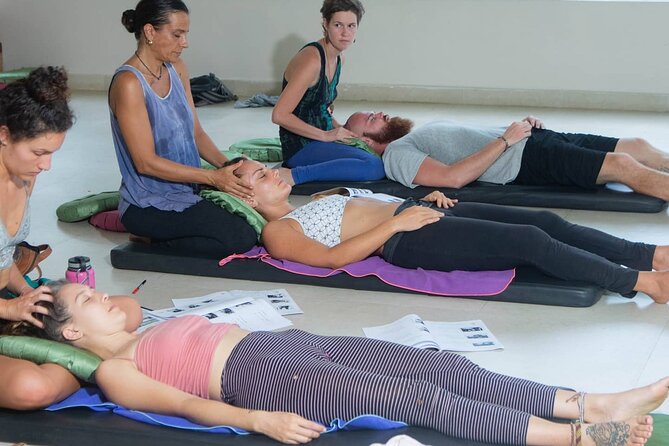
This is not a spa treatment disguised as a class. You are there to learn a traditional Thai massage sequence and practice it repeatedly, while yoga and meditation help you pay attention to posture, breathing, pressure, and movement.
The course presents Thai massage as a practical skill for personal use, family care, and community work. That does not make it a medical qualification, and you should not treat the certificate as a license to diagnose or treat illness. It does mean you can expect an introduction to a hands-on tradition that places value on listening to the body and working with care.
I find the mix of physical practice and quiet attention appealing. Many massage classes focus only on where to place the hands. Here, the stated approach also asks you to notice your own breath, body movement, emotions, and changing state of mind. That can make the training feel more reflective than a standard technique class.
You should also arrive ready to participate. Five or six hours per day is a substantial commitment, especially when some of that time involves repeated practice. If you want a short taster session between sightseeing stops, this is the wrong format. If you want a week to build a foundation, it makes more sense.
More Yoga and Wellness Retreats in Nepal:
- Ghorepani Ghandruk Wellness Yoga Trek
★ 5.0 · 3 reviews - Kathmandu: Full-Day Yoga, Body Massage and Pedicure Package
★ 5.0 · 3 reviews - Retreat day tour : Massage and Yoga
★ 5.0 · 2 reviews
Day one: arriving at Karmayogi in Lakeside
The meeting point is Karmayogi Yoga Retreat and School on Lakeside Road 6 in Pokhara. The stated start time is noon, and the activity ends back at the meeting point each day or at the end of the program, according to the supplied details.
Your first day should be used to settle into the teaching style, meet the group, and learn how the week will work. The exact day-by-day order is not provided, so I would not expect a fixed sightseeing schedule or a list of separate stops. The heart of the experience is the school itself and the training room.
Raj is identified as the main teacher and founder of Karmayogi. The teaching team may also include his sister, brother, or an assistant. That family-based setup is worth noting because it suggests a personal school rather than a large commercial training center.
The group cap is 20 people, but the actual number may be lower. One student who attended in the off-season had individual attention because nobody else had enrolled at that time. You should not count on private instruction, but off-season dates may offer a quieter class.
Days two and three: learning the Thai massage foundation
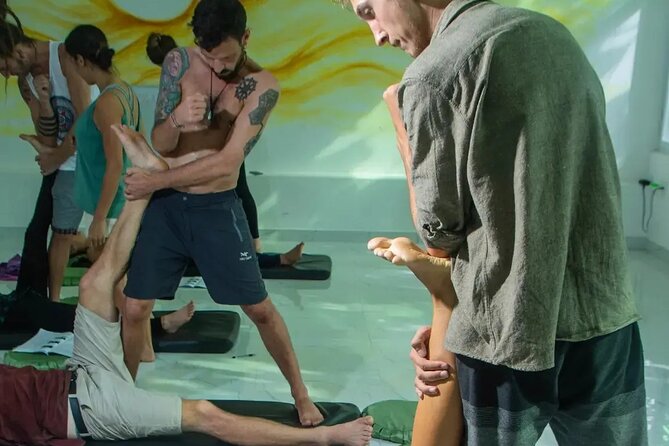
The early sessions focus on the basic principles and a full introductory sequence. You will learn through demonstration and hands-on repetition, rather than by sitting through long lectures.
The course centers on traditional Thai massage techniques and the body’s energy lines, or Nadis. The supplied information does not give a detailed list of every body area or position, so you should think of this as a foundation course rather than a specialist anatomy program.
The practical value lies in learning a sequence you can remember and repeat. One participant described completing the full basic sequence, along with extra techniques. That detail matters because it points to training that goes beyond a few sample movements, while still staying at an introductory level.
You will probably spend time both giving and receiving massage. That is important. When you receive the work, you notice pressure and rhythm from the other side. When you practice on someone else, you learn how much concentration is needed to keep your hands, posture, and sequence organized.
Raj’s teaching style receives particular praise for patience, kindness, and openness to questions. Those qualities matter in bodywork classes, where a rushed correction can leave you unsure of what you did wrong. Clear guidance is especially useful when several people are practicing at once.
Days four and five: adding yoga, breath, and meditation
Yoga is part of the course rather than an optional extra. Its role is to help you understand movement, body awareness, and the way you use yourself while giving massage.
The information does not specify the exact yoga style or level of difficulty. You should therefore avoid assuming that the sessions are advanced or designed for experienced practitioners. The course is described as suitable for most people, and previous participants found the yoga useful in strengthening their understanding of Thai massage.
Meditation also has a practical purpose. Guided sessions are intended to help you connect with your inner self and develop more awareness of your massage movements. That can sound abstract, but the basic idea is easy to understand: calmer attention may help you notice your hands, your breathing, and the response of the person receiving the work.
For me, this is one of the most appealing parts of the program. You are not simply memorizing a set of positions. You are being encouraged to bring patience and sensitivity to the practice. The course frames Thai massage as a way to develop compassion and awareness toward yourself and other people.
Still, meditation is not everyone’s favorite classroom activity. If you want a purely technical workshop, the reflective elements may feel like extra time. If you enjoy yoga and contemplative practice, they may be what makes the week worthwhile.
A few more spa visits around Nepal worth a look
- 7-Day TaiChi & Qigong Wellness Retreat in China
★ 5.0 · 20 reviews - 7-Day Private Tour, Jordan’s Wellness
★ 5.0 · 6 reviews - 7 Days Dong Van Ha Giang Private Loop Tour with Wellness Programs
★ 5.0 · 4 reviews
Days six and seven: building confidence and finishing the sequence
The final part of the course is where repetition should begin to pay off. You continue practicing the basic sequence, work on additional techniques, and refine your understanding of movement and energy lines.
The available information does not provide a formal exam or a detailed graduation process. You receive a certificate, but the course should be viewed as a starting point. Seven days can give you a strong foundation, yet it cannot replace years of practice.
That distinction is important when you assess the value. The certificate is useful as a record of training, but it does not by itself establish professional competence. Your real benefit comes from the hours of supervised practice, the written course material, and the confidence to continue studying.
The final day also gives you a chance to ask questions and check the sequence. Since one participant specifically praised Raj for welcoming questions and suggestions, I would use that opportunity fully. Ask about hand placement, pressure, transitions, and how to practice safely after you return home.
Why the small-group format matters
The maximum group size is 20. That is not the same as a private class, but it is more manageable than a large lecture-style workshop.
Massage training works best when the teacher can see what you are doing. A slightly misplaced hand or awkward body position may not feel wrong to you, but a teacher can spot it quickly. Smaller numbers also make partner practice easier to supervise.
The off-season experience described by one participant was especially personal because only one student attended. That is an unusual advantage, not a guarantee. If individual attention matters to you, ask about the expected group size before you travel.
The teaching team may include Raj, his sister, his brother, and an assistant. That gives the course a family-school character and may provide more than one set of eyes during practice. The exact staffing can vary, so confirm who will teach your date if that affects your decision.
The setting: Pokhara first, Begnas question second
The experience is marketed as taking place in Begnas, Nepal, while the location is listed as Pokhara and the meeting point is Karmayogi Yoga Retreat and School on Lakeside Road 6. Those details do not line up perfectly.
You should treat Lakeside, Pokhara as the confirmed meeting point because it is the address supplied for the start and finish. If you are booking this specifically for a retreat in the Begnas area, contact the provider and ask whether any part of the course takes place there or whether Begnas is simply part of the program name.
This matters for accommodation and daily transport. If you book a room near Lakeside, you may be close to the stated meeting point. If you plan to stay elsewhere, you need to account for getting to Karmayogi by noon on the first day and attending the daily sessions.
The program itself does not include sightseeing or transport tickets. Its value is in the instruction, not in moving you around Pokhara.
What the $487 price includes and excludes
At $487 per person, the course costs more than a one-day massage lesson but covers a full seven-day training period. The price includes all fees and taxes, course books, a certificate, drinks, and refreshments.
The books are useful because a week of hands-on learning can blur together once you leave. Written material gives you something to review as you practice later. The certificate provides a simple record that you completed the course.
The exclusions are significant:
- Food is not included.
- Accommodation is not included.
- Travel tickets of any kind are not included.
So the advertised price is not your complete trip cost. Add seven days of lodging and meals, plus any transport needed to reach Pokhara and Karmayogi. You may also want to budget for extra drinks or meals outside the included refreshments.
I consider the course a fair value if you plan to use the skill afterward and can commit to the daily hours. It is less attractive if you are mainly seeking relaxation. A spa retreat would give you more rest. This program asks you to work, practice, and pay attention.
Who will get the most from this retreat
You are a good match if you want to:
- Learn a traditional Thai massage foundation.
- Practice for several hours each day.
- Combine bodywork with yoga and meditation.
- Develop a skill for personal use, family care, or community work.
- Study in a supportive setting with other yogis and healers.
- Receive a certificate and course books at the end.
The course may also suit you if you already practice yoga and want to understand how body awareness carries into massage. One previous student described yoga as helpful for understanding Thai massage more fully.
You should think twice if you need a highly specific professional qualification, a medical massage credential, or a short and easy holiday activity. Those expectations do not match the information provided.
You also need to be comfortable with hands-on partner work. Most people can participate, but the program involves active massage practice, yoga, and meditation. If you have any physical concern, ask the provider for guidance before booking.
Practical planning for your week
Start at noon on the first day, and plan to arrive at Karmayogi Yoga Retreat and School with enough time to find Lakeside Road 6. The course ends back at the meeting point, so you do not need to arrange a separate end location.
Because the daily workload is five to six hours, choose accommodation that makes it easy to reach the school. The supplied information confirms access near public transportation, but it does not identify a particular bus route or pickup service.
Keep your schedule fairly open. The program is designed as a seven-day training block, and sightseeing plans may compete with the daily practice. You should also confirm the precise daily timetable, what to bring, and whether the course takes place at Lakeside or another site in the Begnas area.
Cancellation is free if you cancel at least 24 hours before the local start time. A cancellation made less than 24 hours before the start is not refundable, and changes made inside that period are not accepted.
Should you book the seven-day training?
I would book this if you want a serious introduction to Thai yoga massage and you like the idea of learning through repeated practice, yoga, and meditation. The strongest reasons are the patient teaching style associated with Raj, the chance to learn a complete basic sequence, and the included books and certificate.
I would not book it as a simple wellness break. The daily hours are long, and you must pay separately for food, lodging, and transport. Before paying, confirm the Begnas versus Lakeside location and ask about the expected group size for your dates.
For the right student, this is a focused week with a useful skill at its center. For someone hoping to spend seven days being pampered, it will feel more like school than a holiday, which is exactly the point.
FAQ
How long is the Thai yoga massage training?
The program lasts approximately seven days.
Where does the experience start?
It starts at Karmayogi Yoga Retreat and School, Lakeside Road 6, Pokhara 33700, Nepal.
What time does the course start?
The stated start time is 12:00 pm.
Where does the activity end?
The activity ends back at the meeting point.
How many people can join?
The maximum group size is 20 participants.
How many hours of practice are scheduled each day?
You can expect five to six hours of Thai massage, yoga, and meditation each day.
What subjects are included in the training?
The course covers traditional Thai massage techniques, the body’s energy lines known as Nadis, yoga, and guided meditation.
Are food and accommodation included?
No. Food and accommodation are not included in the price.
What is included in the $487 price?
The price includes all fees and taxes, books, a certificate, drinks, and refreshments.
Can I cancel for a full refund?
Yes, if you cancel at least 24 hours before the experience start time. Cancellations made less than 24 hours before the start are not refunded.
Just added around Nepal
- 1-Hour Swedish Massage in Pokhara with Pick Up★ 5.0 · 2 reviews
- Trekkers & Hikers Spa Package by Heritage Spa★ 5.0 · 9 reviews
- Singing Bowl Therapy + Full Body Massage at Ayurveda Health Home★ 5.0 · 2 reviews
- Short Day Trip Hiking with 1 Hour Spa Massage in Kathmandu★ 5.0 · 11 reviews
- Ghorepani Ghandruk Wellness Yoga Trek★ 5.0 · 3 reviews
- Spa and Massage Therapy for a Relaxing Experience in Avata, Kathmandu★ 5.0 · 3 reviews
- Retreat day tour : Massage and Yoga★ 5.0 · 2 reviews
- 2 Hours full body Massage Spa Package in Kathmandu★ 5.0 · 8 reviews
Nepal Massage and Spa, compared.
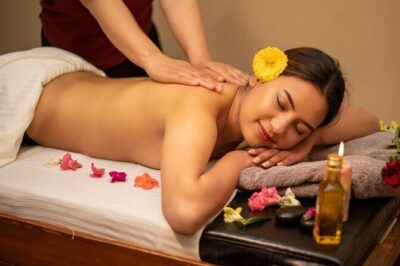
Shirodhara and Sound Healing Spa Experience in Kathmandu
Read our review →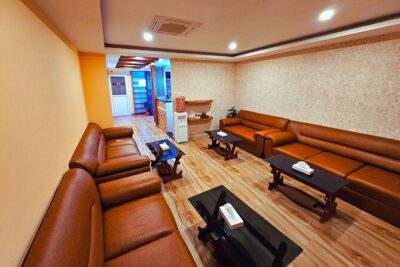
6 Hours Spa Package in Kathmandu (Massage, Sauna, Steam, Jacuzzi)
Read our review →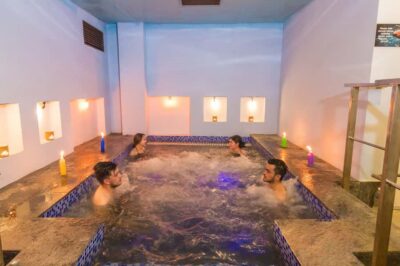
Kathmandu: Spa Package with Massage, Facial and Bath
Read our review →
Short Day Trip Hiking with 1 Hour Spa Massage in Kathmandu
Read our review →

2 Hours full body Massage Spa Package in Kathmandu
Read our review →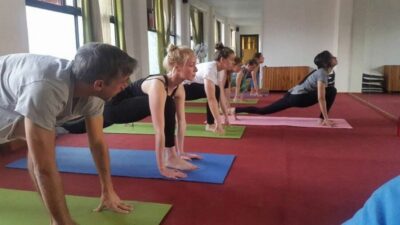
Kathmandu: Full-Day Yoga, Body Massage and Pedicure Package
Read our review →Where else this treatment appears