
Review · VIETNAM
Vietnamese deep tissue neck and shoulder massage class
Tension has a way of following you. This Vietnamese neck and shoulder massage class in Dong Bac offers hands-on practice rather than a simple demonstration, with an instructor correcting your movements as you work. I like the small private-group format, and I like that you practice both giving and receiving massage, so you learn how each technique should feel. The main consideration is the wide 3 to 18-hour duration range, which means you need to check the selected option carefully before booking.
The class is taught by massage professionals with more than six years of experience and offered in English, Vietnamese, or French. Minh receives especially strong praise for explaining the principles behind each movement, not just copying a routine. You also receive a certificate, handout, refreshments, and follow-up resources, making this more useful for a hobbyist or aspiring practitioner than for someone seeking only a relaxing treatment.
Key points before you book
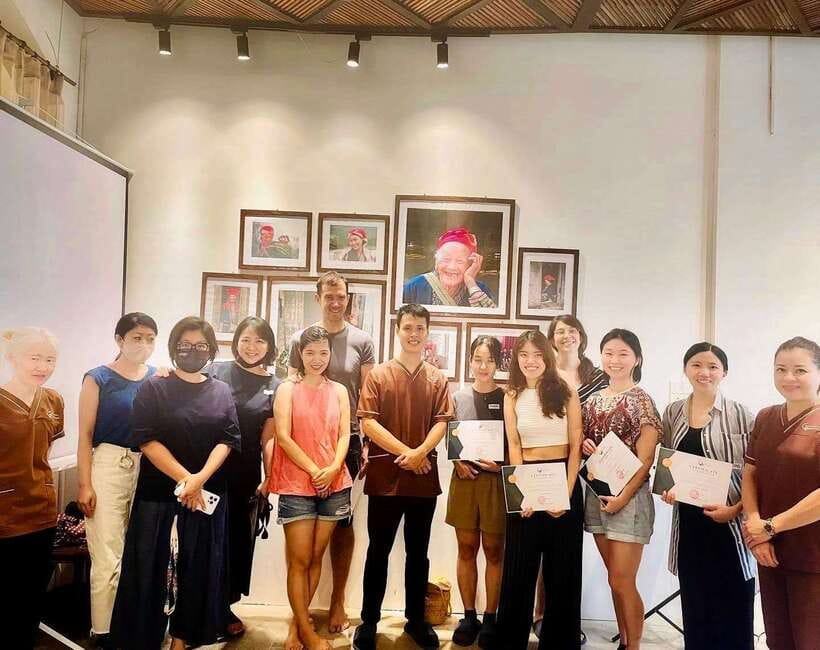
- Practice with a partner or mannequin: You learn by doing, with time to give and receive massage.
- Minh is praised for teaching the why: His instruction covers massage principles as well as individual techniques.
- French-language support is available: Instructors can teach in English, Vietnamese, or French.
- Small private groups matter: You should have more room to ask questions and receive corrections.
- The course includes a certificate: You receive proof of completion, though later renewals or upgrades cost extra.
- The setting is built for calm: Essential oils, quiet music, herbal tea, and light snacks are part of the class.
What this Dong Bac massage class is really about
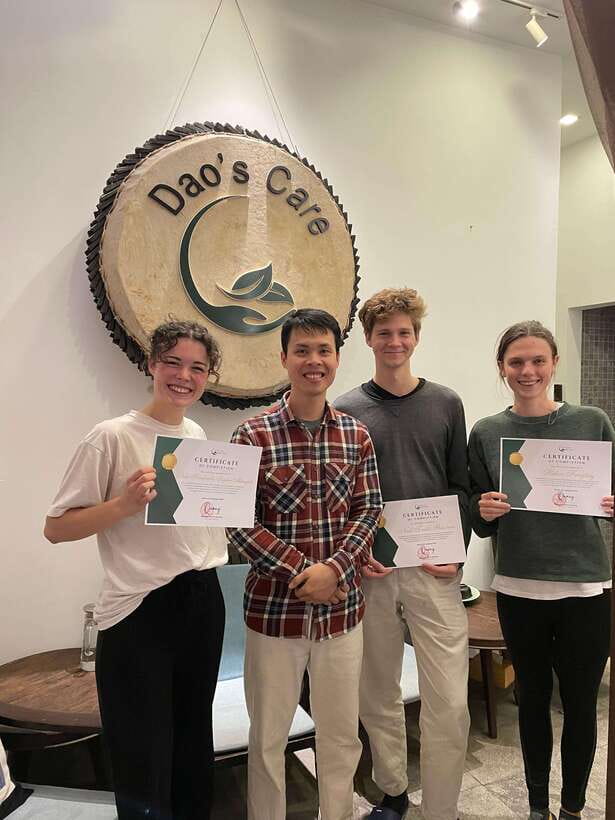
This is a skills class, not simply a spa appointment. You come to learn how to work on the neck and shoulders, then practice those movements with guidance. The focus is on easing tension, helping someone relax, and building a safe, repeatable routine.
That distinction matters. If you want an hour of someone else working on your muscles, this is not the right format. You will spend time listening, watching, asking questions, practicing, and giving feedback. The reward is that you leave with a technique you can use again at home.
The course price is $66 per person. That is a reasonable value if you want instruction, hands-on practice, a certificate, oils and lotions, refreshments, and access to follow-up support. It is less attractive if you only want personal relaxation, since much of the session involves learning and practicing rather than receiving a treatment.
The private-group setup should also help keep the session focused. Instead of trying to follow a large room from the back, you can ask for help with pressure, hand placement, and movement. The exact group size is not stated, but the format is described as small and private.
More Full Body Massages in Vietnam
- Deep Muscular Therapy
★ 5.0 · 496 reviews - Experience Asian Style Full Body Massage Therapy
★ 5.0 · 142 reviews - Hue Traditional Full Body Massage Experience, 75 mins
★ 5.0 · 88 reviews
Entering the calm room with oils and soft music
The class begins in a quiet setting with essential oils, relaxing music, and aromatherapy. These touches are not just decoration. They introduce you to the atmosphere you might later create for massage at home.
You receive advice on lighting, music, and oils, so the class covers more than hand technique. That is useful if your aim is to offer massage to family members, friends, or future clients. A good massage depends partly on comfort and trust, and the room setup can affect both.
The opening introduction covers the basic ideas behind massage therapy and its benefits. You then move into a gentle warm-up, with simple stretches to prepare the muscles. This gives the class a sensible start and helps you understand that massage should not begin with sudden, forceful pressure.
You should arrive ready to pay attention to body position and movement. Neck and shoulder work can look easy when demonstrated, but small changes in pressure or angle may affect comfort. The instructor’s role is to help you notice those differences.
Learning effleurage, kneading, and the basic flow
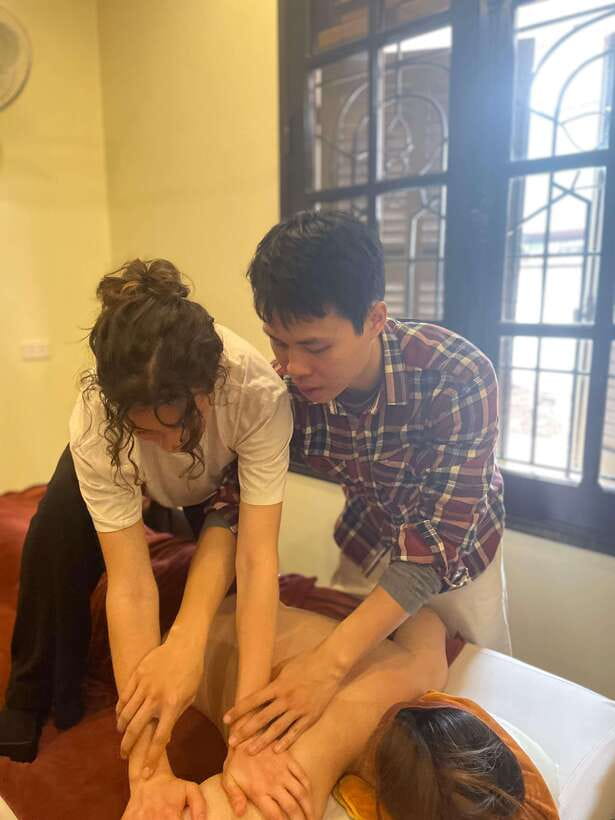
The first main techniques include effleurage and kneading. Effleurage generally involves smooth, gliding strokes, while kneading uses a more worked, compressing motion. Here, the important point is not memorizing names. You learn how the movements connect into a useful massage sequence.
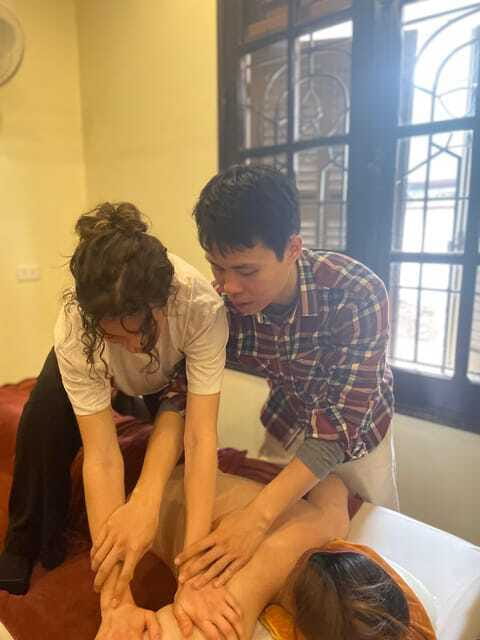
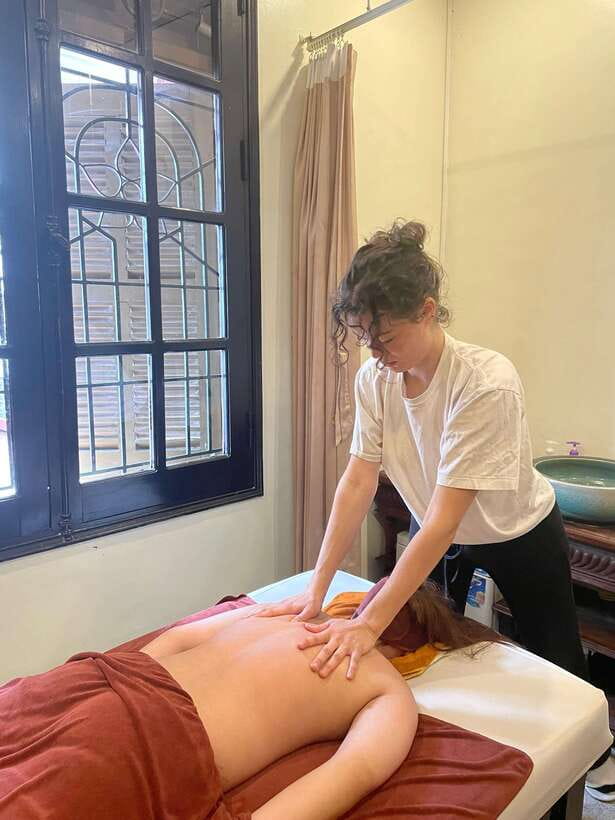
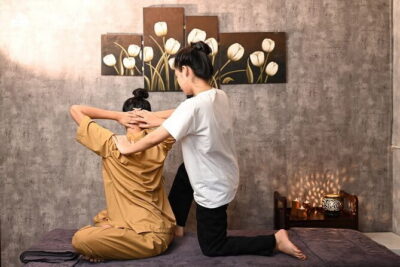
The instructor demonstrates the techniques on a partner, then guides you as you try them. Hands-on instruction is the strongest part of this format. You do not have to guess if your hands are too heavy or if your movement is awkward, since the instructor can offer immediate adjustments.
You practice in pairs, taking turns giving and receiving massage. This two-way format is valuable because it shows you what the person on the table or chair may feel. Pressure that seems light from your own hands may feel quite different on your neck and shoulders.
You also get a chance to ask questions as you go. That makes the class more practical than a fixed demonstration where questions have to wait until the end. If you are new to massage, ask about pressure early. It is easier to build good habits than to correct a forceful technique later.
Moving into targeted neck and shoulder work
As the lesson continues, the instructor introduces more advanced methods for areas of tension. The wording of the course points to targeted work around the neck and shoulders rather than a full-body massage routine.
This can suit people who carry stress in those areas or spend long periods at a desk. It can also help someone who wants to add a focused neck and shoulder service to an existing massage practice. The class does not claim to train you in every area of massage, so you should see it as a focused skill session.
The teacher circulates while you work, offering personal tips and corrections. That is where the small-group promise becomes important. You are not simply copying a set of hand movements. You are learning how to adjust your approach for the person in front of you.
Minh is especially praised for explaining the principles behind the techniques and for caring about students getting them right. That is a useful quality in a practical class. A good instructor should explain not only what to do, but also why the movement is being used and what sensation you are trying to create.
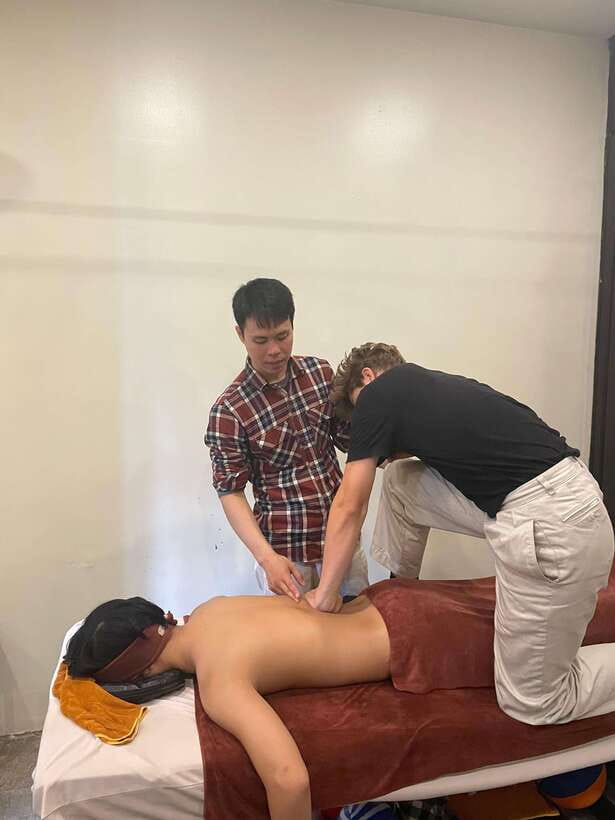
One participant also had a professional masseur serve as a practice partner, with immediate feedback based on his experience. You should not assume every class includes that exact arrangement, but it shows the value of direct correction from someone familiar with the craft.
Same place, a different way to unwind:
- Herbal Aroma Journey (Gentle | Aromatic Flow)
★ 5.0 · 610 reviews - Wyndham Lynn Times Onsen Wellness
★ 5.0 · 404 reviews - One Hour Spa Experience in Hoi An
★ 5.0 · 189 reviews - Private Hoi An Rosara Spa with Free Pick up or Drop off
★ 5.0 · 188 reviews
Receiving massage helps you understand pressure
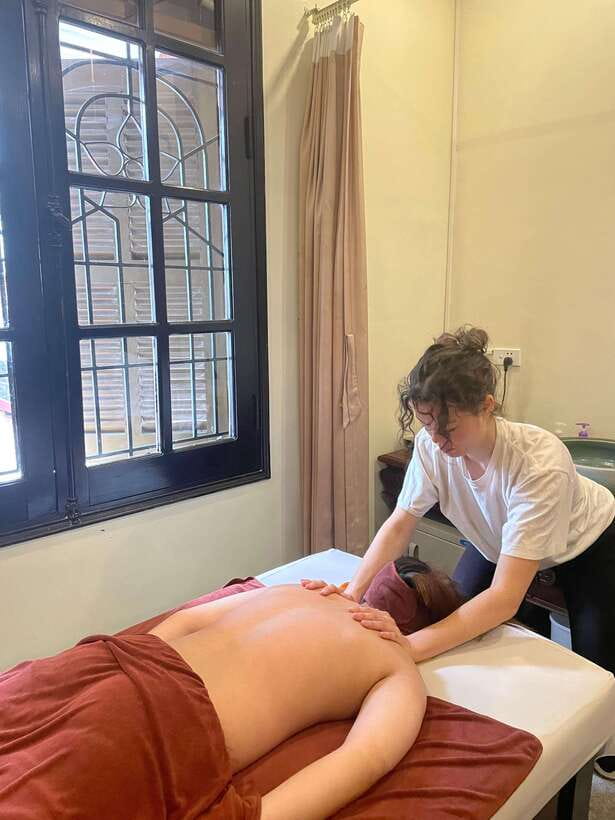
Many classes teach the giver and forget the receiver. This one includes both roles, which I consider a major strength. When you receive the technique yourself, you can judge whether the movement feels soothing, uncomfortable, too fast, or too light.
That firsthand knowledge helps you work with more care. It can also improve your ability to ask a future client or family member useful questions. Instead of asking only if the pressure is okay, you may become more alert to rhythm, location, and overall comfort.
The practice is not described as a medical treatment. You should approach it as an introduction to relaxation and tension relief, not as a substitute for professional medical care. If you have a health concern involving your neck or shoulders, the supplied information does not say how the instructor handles medical conditions, so ask before participating.
The class also excludes alcohol and drugs. That is a sensible rule for any hands-on activity involving pressure, attention, and physical contact.
The instructors and languages available
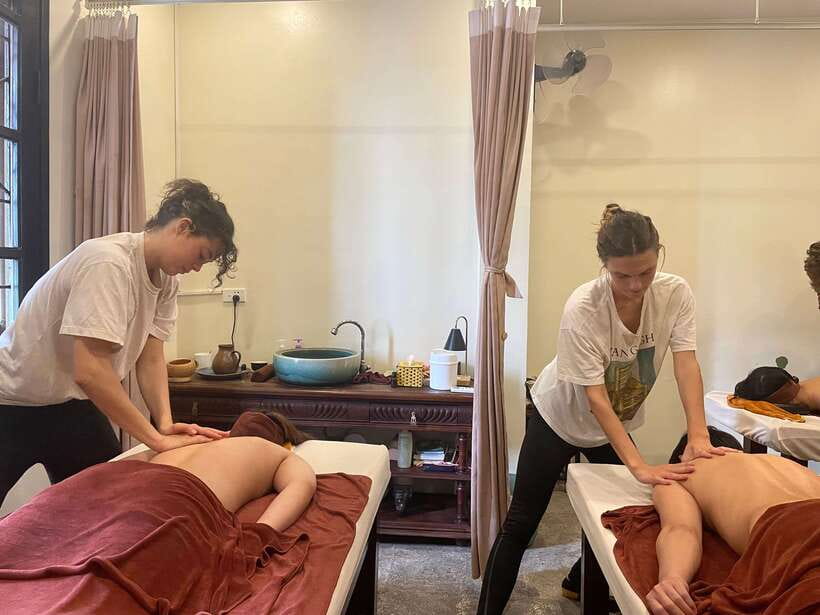
Instruction is available in English, Vietnamese, and French. That gives the class wider appeal, particularly if you are more comfortable learning bodywork terms in French or Vietnamese than in English.
The instructors are described as certified massage therapists with more than six years of experience. That background should give the session a practical foundation, though the exact instructor depends on the date and option you book.
Minh is named as an excellent instructor who teaches both technique and principle. Corinne is also thanked for providing an informative class. Another participant received individual French instruction from a trainer, along with help from a professional masseur. These details suggest that language support can be personal rather than limited to printed material.
Still, you should check the available language when you select your date. The activity lists three languages, but it does not guarantee that every instructor will teach every session in all three.
What is included for the $66 price
At $66 per person, the value depends on your purpose. The fee covers more than a short lesson:
- Instruction from a certified massage therapist
- Hands-on guidance and individual feedback
- Practice with partners or mannequins
- Massage oils and lotions
- Aromatherapy, relaxing music, and a calm setting
- Advice for arranging massage at home
- Herbal tea and light snacks
- A completion certificate
- Follow-up support and resources
- A handout for continued practice
I like the handout because massage is easy to forget once you leave the room. Having written guidance gives you something to consult when you practice later.
The certificate is useful if you want a record of completing the class, but you should not treat it as a full professional license. Certification renewal or upgraded certification may involve an additional fee. Extra practice hours and private one-on-one sessions can also cost more.
The included tea and snacks are small details, but they fit the tone of the course. You are likely to spend several hours concentrating and practicing, so a short refreshment break can make the session more comfortable.
Timing, meeting point, and the long duration range
The advertised duration ranges from 3 to 18 hours. That is a very broad spread. A three-hour introduction is a compact lesson, while an extended option could allow far more repetition and correction.
You should check the exact duration and starting time before paying. The information does not provide a single fixed schedule, and the meeting point may change depending on the option selected. The activity ends back at the meeting point.
Transportation and accommodation are not included. If the class takes place away from where you are staying, budget separately for getting there and, if needed, an overnight stay. This is especially important for a longer course option.
The reserve-now, pay-later policy lets you hold a place without paying immediately. Free cancellation is available up to 24 hours in advance for a full refund. Those terms are helpful when your Vietnam plans are still shifting, but you should still check the final booking conditions for the specific option.
Who will get the most from this class
I would suggest this class to several kinds of people:
- Someone who wants to help a partner or family member with everyday neck and shoulder tension
- A massage hobbyist who wants to improve basic technique
- A current bodywork practitioner adding focused neck and shoulder methods
- Someone considering massage as a business
- A person who learns best by practicing rather than watching
- A visitor looking for a structured wellness activity in Dong Bac
It may be less suitable if you want quiet personal pampering. You will be an active participant, and the learning process may involve repeated practice, questions, and correction.
The course is not suitable for children under 10, people with altitude sickness, or people over 70. Those limits are stated directly, so do not assume the activity can be adapted unless you confirm it before booking.
Small details that make the class more useful at home
The home-setting advice gives the class a practical afterlife. You learn about lighting, music, and oils, which can help you create a calmer setting without expensive equipment.
You also receive guidance on how to continue practicing. That matters because smooth massage comes from repetition. One session can introduce the movements, but regular practice is what helps you remember hand position, rhythm, and pressure.
The certificate adds a formal finish, while the follow-up resources give you a way to keep developing. I would treat these as helpful extras, not proof that you can immediately perform advanced professional work.
The strongest value comes from the instructor feedback. If you pay attention to corrections and take notes, you can leave with a clear starting routine rather than a vague sense that massage is relaxing.
Should you book the Vietnamese neck and shoulder massage class?
Book it if you want to learn a focused skill in a calm setting and prefer practice over passive sightseeing. The $66 fee makes good sense for someone who values guided instruction, paired practice, a certificate, and materials to use later.
I would be cautious if your goal is simply to receive a massage, if you need a fixed short schedule, or if you are booking for someone covered by the age or health restrictions. Before confirming, check the exact duration, starting time, meeting point, language, and instructor.
For the right person, this is a useful Dong Bac activity with a clear purpose. Minh’s principle-based teaching, personal feedback, and the chance to understand massage from both sides give the class more substance than a quick demonstration.
FAQ
Where does the Vietnamese neck and shoulder massage class take place?
The class takes place in Dong Bac, Vietnam. The exact meeting point may vary according to the option you book.
How much does the class cost?
The listed price is $66 per person.
How long does the class last?
The available duration ranges from 3 to 18 hours. Check the available options for the exact length and starting time.
Which languages are available?
Instruction is available in English, Vietnamese, and French.
Is this a private class?
Yes. The activity is described as a private group, with small class sizes intended to allow individual attention.
What do I receive after completing the course?
You receive a certificate of completion, a handout, follow-up support and resources, and practical instruction in neck and shoulder massage techniques.
Can children or older people join?
The class is not suitable for children under 10 or people over 70. It is also not suitable for people with altitude sickness.
More Workshops in Vietnam
- Hoian Cooking Class And Foot Massage Private Tour
★ 5.0 · 5 reviews - Hoi An Eco Cooking Class and Massage
★ 5.0 · 2 reviews - Ubud: Wellness Retreat with Massage, Yoga Class, and Lunch
★ 4.8 · 93 reviews - Marrakech Hammam, Massage & Berber Carpet Weaving Workshop
★ 4.6 · 48 reviews
Just added around Vietnam
- Hoi An: Ylang Ylang Spa Experience (Free pick up for 2pax++)★ 4.5 · 17 reviews
- Rora Signature Massage for Ultimate Relaxation★ 5.0 · 8 reviews
- Nha Trang : Enjoy Your Best Of Nha Trang City & Relax In Spa★ 5.0 · 3 reviews
- Private Shore Excursions from Chan Port – Basket Boat- Foot Massage- Hoi An City★ 5.0 · 2 reviews
- Traditional Relaxation Package 105 mins★ 5.0 · 2 reviews
- Hoian Cooking Class And Foot Massage Private Tour★ 5.0 · 5 reviews
- Private Massage Experience Hoi An with Transport★ 5.0 · 3 reviews
- 2-Hours Private Spa Experience in Hoi An★ 5.0 · 22 reviews
Vietnam Massage and Spa, compared.

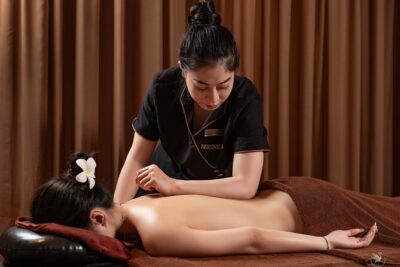
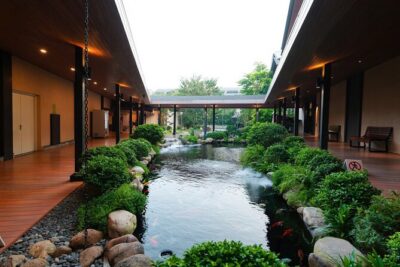
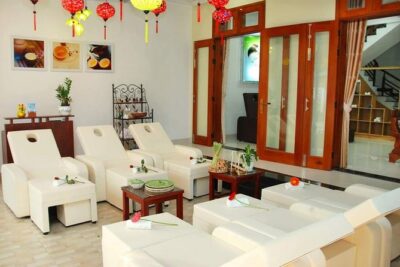
Private Hoi An Rosara Spa with Free Pick up or Drop off
Read our review →
Experience Asian Style Full Body Massage Therapy
Read our review →Where else this treatment appears