
Review · TEL AVIV
Jerusalem & Dead Sea Private Tour – Visit Holy Jerusalem & Dead Sea Relaxation
Jerusalem and the Dead Sea make a powerful one-day pairing. This private tour combines Old City history with time to float in the salt-rich Dead Sea, giving you two very different sides of Israel without changing hotels or arranging separate transport. I like the panoramic start from the Mount of Olives, and I like having a private vehicle and guide for a route that would be awkward to manage alone. The main drawback is the pace: eight to eleven hours, or close to twelve depending on the schedule, leaves little room for lingering at each holy site.
I also like that hotel pickup and drop-off are included, along with an air-conditioned vehicle and a licensed guide. Guides named in the feedback include Enrique, Benjamin, Saul, and Shaul, with particular praise for clear historical explanations, humor, punctuality, and careful time management. Keep in mind that the tour description gives conflicting information about entrance fees, so confirm exactly what is covered before booking.
Five things to know before you book
- The tour covers two major sights in one long day: You see Jerusalem in the morning, then travel through the Judean hills to the Dead Sea.
- The Mount of Olives provides the key opening view: It helps you understand Jerusalem’s geography before you enter the Old City.
- The Old City section is mainly on foot: Comfortable shoes matter, and modest clothing is required at holy places.
- The Dead Sea stop is for floating and mud: You receive about two hours at a shore resort, with food and drinks not included.
- Private touring allows more personal attention: Only your group participates, and guides such as Enrique and Saul are praised for adapting the day to the group.
- The price is $220 per person: That can be fair for a private vehicle, guide, hotel transfers, and a full day, but clarify entrance-fee arrangements first.
Starting above Jerusalem at the Mount of Olives
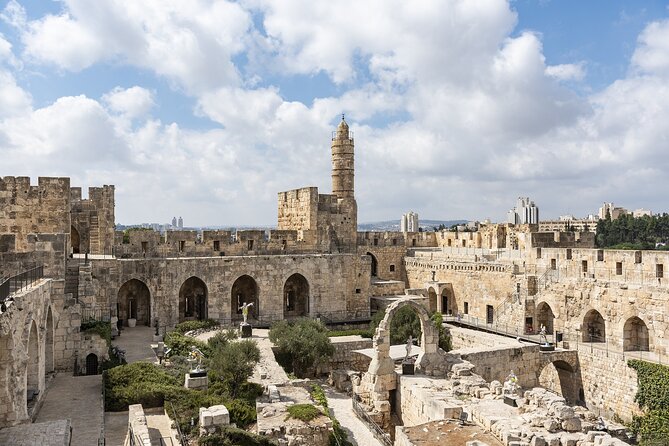
The day begins with a drive up the Mount of Olives, where you get a broad view toward Jerusalem and the Temple Mount. This is more than a quick photo stop. It gives you a useful map in your head before the walking begins: the Old City sits below, the Temple Mount forms the visual center, and the Judean Desert stretches away to the east.
The Mount of Olives carries major importance in Christian tradition. The New Testament describes it as the place of Jesus’ ascension, and it appears several times in accounts of his route between Jerusalem and Bethany. A guide can also explain the connection between the hill, the Temple Mount, and the desert beyond.
You have about 30 minutes here. That is enough for the view and an introduction, but not enough for a long walk or a close look at every part of the hill. Bring a hat, sunglasses, and sunscreen. Jerusalem’s sun can be strong, and the day gets warmer as you descend toward the Dead Sea.
A few more spa visits around the world worth a look
- Budapest: Széchenyi Spa Day Ticket with Optional Upgrades
★ 4.3 · 23,911 reviews - Reykjavik: Sky Lagoon Entrance Pass With 7-Step Spa Ritual
★ 4.8 · 6,166 reviews - Prague: Bernard Beer Spa with Beer and Massage Option
★ 4.8 · 4,164 reviews
Gethsemane and the emotional weight of the olive trees
At the foot of the Mount of Olives, the tour continues to the Garden of Gethsemane. Christian tradition identifies this as the place where Jesus prayed before his arrest. Several small olive gardens on church property are associated with biblical Gethsemane, so the historical identification is part of a wider religious tradition rather than a simple archaeological certainty.
The stop lasts about 30 minutes. You can expect a quieter setting than the narrow streets of the Old City, with time to look at the olive trees and hear the account of the site. This is a meaningful pause early in the day, especially for visitors coming to Jerusalem for religious reasons.
The short visit also shows one limitation of the schedule. You will get an introduction rather than a long period for private reflection. If you need extended time at each sacred place, a tour focused only on Jerusalem would suit you better.
Mount Zion, King David’s Tomb, and the Cenacle
Mount Zion brings together Jewish and Christian traditions in a compact stop of about one hour. The route includes King David’s Tomb and the Room of the Last Supper, also called the Cenacle.
King David’s Tomb is considered one of the most sacred Jewish sites in this part of Jerusalem. At the same time, there is no certainty that the tomb is actually David’s burial place. Biblical references place David’s burial in the City of David, below the Temple Mount. This is a good example of why a strong guide matters: the visit involves faith, tradition, and historical debate all at once.
The upper floor contains the Room of the Last Supper. Christian tradition identifies it as the place where the Last Supper took place, making it one of the city’s important Christian sites. The location also reflects Jerusalem’s overlapping religious claims, which are a central part of the city’s character.
The one-hour stop should feel manageable, though the exact time inside each site can depend on access and crowd conditions. Modest dress is required at holy places, and the tour specifically advises head coverings. If your clothing is not suitable, the visit may be less comfortable or less straightforward.
Walking the Via Dolorosa into the Christian Quarter
The Via Dolorosa is the main walking section of the Jerusalem portion. You move through the Christian Quarter along the route traditionally associated with Jesus’ path to crucifixion. The lanes are narrow, stone-paved, and full of religious meaning.
The tour allows about two hours for the Via Dolorosa and the Church of the Holy Sepulchre. That is useful because this part of Jerusalem needs time on foot. You are not simply looking at a building from outside. You are moving through a processional route with stations connected to Christian prayer and ritual.
The Church of the Holy Sepulchre is traditionally identified as the place of Jesus’ crucifixion, burial, and resurrection. The site is also associated with Golgotha, or Calvary. For many Christians, this is the most important stop of the day.
The church can be intense and crowded, and the narrow approach makes walking shoes essential. You may need patience as you move between religious spaces. The tour provides context and direction, but it cannot guarantee a quiet visit or unlimited time at any one shrine.
This is also where the guide’s style can shape the day. Enrique is praised for combining humor with detailed teaching about history and theology. Saul and Shaul are described as patient, attentive, and good at keeping a group on schedule. Those qualities matter in the Old City, where a clear meeting plan and steady guidance prevent the visit from becoming confusing.
Same place, a different way to unwind:
- Body Massage Experience in Ubud Traditional Spa
★ 5.0 · 3,506 reviews - Budapest: Full-Day Gellért Spa Ticket
★ 4.2 · 3,340 reviews - Istanbul: Private Turkish Bath, Massage, and Spa in Old City
★ 4.6 · 3,225 reviews - Marrakech: Spa Massage and Steam Hammam with Pickup
★ 4.6 · 2,873 reviews
The Cardo and the Jewish Quarter
After the Christian Quarter, the route continues through the Armenian and Jewish quarters to the Cardo. This restored Roman road helps you see that Jerusalem is not only a collection of religious shrines. It is also an ancient city rebuilt, altered, and reused over many centuries.
The southern section of the Cardo was built during the reign of Byzantine Emperor Justinian, from 527 to 565. It continued an earlier Roman section and linked major churches, including the Holy Sepulchre and the Nea Church. The excavated roadway gives you a glimpse of how the city was organized in the Byzantine period.
The stop lasts about 30 minutes. That is enough for an overview and photographs, though anyone interested in archaeology may wish for more time. The value here is in the contrast: the morning moves from biblical traditions to Roman planning and Byzantine Jerusalem, all within a short walk.
The Western Wall and a respectful visit
The final major Old City stop is the Western Wall, also called the Kotel. It is part of a much longer ancient retaining wall near the Temple Mount. Its importance in Judaism comes from its closeness to the Temple Mount, while access restrictions make it the holiest place where Jewish prayer is permitted.
You have about 30 minutes. That should give you time to observe the prayer area and understand the site, but the visit is not designed for a long personal ceremony. Dress modestly, follow the local rules, and listen carefully to your guide’s instructions.
The Western Wall is also a useful moment to consider the city’s layers of belief. The same small area carries deep meaning in Judaism, Christianity, and Islam, though this tour focuses on the Jewish and Christian sites listed in the route.
The long transfer to the Dead Sea
After Jerusalem, you leave the Old City and drive through the Judean hills toward the Dead Sea. The transfer is an important part of the day, not just empty travel time. You move from a high, historic hill city toward the lowest place on earth, in the Jordan Rift Valley between Jordan and the West Bank.
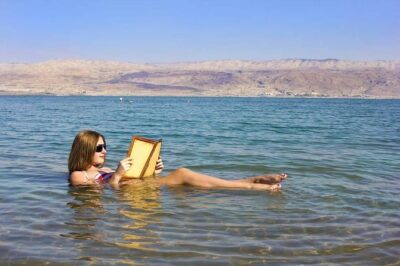
The Dead Sea is also called the Sea of Salt. Its high salt content lets you float on the surface, creating an unusual physical experience. The water is not a normal swimming environment, so you should follow the instructions at the resort and avoid rubbing your eyes while in the water.
The listed stop lasts about two hours at a Dead Sea resort. You can float, cover yourself with mineral-rich mud, and relax before the return drive. The mud bath is optional, which is useful if you prefer simply to sit by the water or spend less time covered in mud.
Bring a towel, swimsuit, sunscreen, and sunglasses. Towels are specifically recommended, and food and drinks are not included. The exact resort is not named, so facilities and changing arrangements should be confirmed before you go.
Is $220 per person good value?
At $220 per person, this is not a budget outing. The price becomes easier to justify if you value a private vehicle, a licensed guide, hotel pickup and drop-off, and the ability to keep the day limited to your own group.
Private touring is especially useful for families or small groups with different walking speeds. Feedback about Benjamin highlights punctual driving, a comfortable vehicle, and a willingness to adjust arrangements. Other comments describe guides who helped manage demanding schedules and added useful explanations beyond the basic route.
The value is weaker if you mainly want a quick transfer and a few photographs. You are paying for interpretation, coordination, and convenience, not just transportation. Since entrance fees are described inconsistently, ask for a clear breakdown of the $220 before paying. One part of the information says all entrance fees are included, while another says they are not included. That needs clarification.
Food, drinks, and personal expenses are not included. Plan for those separately. The day is also long, so the physical and mental value depends on your energy level. You will walk in Jerusalem, sit through road transfers, and then spend time in the water or sun at the Dead Sea.
Who will enjoy this private day most?
I would recommend this trip to first-time visitors with limited time who want both Jerusalem and the Dead Sea. It works well for families, couples, and small groups that want a guide rather than a large coach excursion.
It is also a strong choice if religious sites are central to your trip. The route includes the Mount of Olives, Gethsemane, Mount Zion, the Via Dolorosa, the Holy Sepulchre, and the Western Wall. You get a useful introduction to several traditions in one day.
The tour is less suitable if you want slow, independent exploration. Jerusalem alone can fill a full day, and this schedule gives only short visits to some important places. It is also not ideal if you dislike early starts, long road transfers, or tightly arranged sightseeing.
The private format helps, but it does not remove the basic limits of time. You can ask questions and receive more direct attention, yet you still need to keep moving to reach the Dead Sea.
Practical advice for a smoother day
Wear comfortable walking shoes with good grip. The Old City includes stone lanes, and the schedule involves several hours on foot.
Dress modestly and carry a head covering for religious sites. This is not only a matter of comfort. It helps you enter sacred places respectfully and avoids delays.
Pack sunscreen, a hat, sunglasses, and a towel. Keep water with you, since food and drinks are not part of the tour price.
Ask who your guide will be. Enrique, Benjamin, Saul, and Shaul are names associated with strong feedback about humor, historical explanation, punctuality, and personal care, but a particular guide is not guaranteed.
Confirm the entrance-fee policy, resort facilities, pickup time, and expected finish time before departure. The duration is variously given as eight to eleven hours and about twelve hours, so the final schedule matters if you have evening plans.
Should you book this Jerusalem and Dead Sea tour?
Book it if you have only one full day and want the main Jerusalem holy sites plus the Dead Sea without handling the transport yourself. The private format, hotel transfers, air-conditioned vehicle, and strong guide feedback make the $220 price reasonable for a small group that values ease and explanation.
Choose a different plan if Jerusalem deserves your full attention, or if you want long, quiet visits at each site. Before booking, settle the entrance-fee confusion and confirm the day’s exact length. With those points clear, this is an efficient and meaningful introduction to two very different parts of Israel.
FAQ
Where does the tour begin?
The experience is based in Tel Aviv, with pickup offered from your hotel. The overview also refers to a morning departure from Herzliya, so confirm your exact pickup location when booking.
How long does the tour last?
The duration is listed as approximately eight to eleven hours, while the overview describes it as a 12-hour day trip. Confirm the expected departure and return times before booking.
Is hotel pickup and drop-off included?
Yes. Hotel pickup and drop-off are included, along with an air-conditioned vehicle.
Is this a private tour?
Yes. Only your group participates in the private activity.
Which Jerusalem sites are visited?
The route includes the Mount of Olives, Garden of Gethsemane, Mount Zion, King David’s Tomb, the Room of the Last Supper, the Via Dolorosa, the Church of the Holy Sepulchre, the Cardo, and the Western Wall.
What happens at the Dead Sea?
You stop at a Dead Sea resort for about two hours. You can float in the salt-rich water and optionally use the mineral-rich Dead Sea mud.
Are meals and drinks included?
No. Food and drinks are not included. Personal expenses are also excluded.
What should I bring and wear?
Bring comfortable walking shoes, a hat, towel, sunglasses, and sunscreen. Modest clothing and a head covering are required for visits to holy sites in Jerusalem.
Just added around the world
- Zermatt: Private Night Spa★ 5.0 · 3 reviews
- Hoi An: Ylang Ylang Spa Experience (Free pick up for 2pax++)★ 4.5 · 17 reviews
- Zell am See: Tauern SPA Day Ticket for Water World★ 4.5 · 9 reviews
- Watersport Bali: Banana Boat, Parasailing, JetSki + Spa Bali★ 4.3 · 3 reviews
- Xi’an: Traditional Chinese Massage or Spa with Meal★ 4.7 · 13 reviews
- Yoga And Balinese Massage Home Services★ 5.0 · 3 reviews
- Valencia: Spa Cobre 29 Wellness Experience at Hotel Meliá★ 4.5 · 37 reviews
- Valletta: Private Massage from a world renowned masseuse★ 4.6 · 9 reviews
Tel Aviv Massage and Spa, compared.

From Tel Aviv: Full-Day Dead Sea Relaxation Tour
Read our review →
Full-Day Bethlehem and Dead Sea Relaxation Tour -small group
Read our review →
Dead Sea Relaxation & Bedouin hospitality – Tiny group from Tel Aviv
Read our review →Where else this treatment appears