
Review · HANOI
20-Day Vietnam Itinerary | Discovery and Beach Relaxation
Vietnam rewards a well-planned route. This 20-day journey links Hanoi, Hue, Hoi An, Nha Trang, and Ho Chi Minh City with time for major sights, quiet beach days, and a two-night Halong Bay cruise. I like the broad coverage and the fact that private rooms, domestic flights, meals, guides, transport, and entrance fees are bundled together. The main drawback is the pace: you change cities often, and several days involve long transfers or early starts.
I also like the breathing room built into the schedule. You get free time in Hanoi and Hoi An, two full beach days in Nha Trang, and a final free day in Ho Chi Minh City. Still, this is not a slow holiday. Sapa trekking, Hue monuments, the Mekong Delta, and the Cu Chi Tunnels demand energy, while the exact hotel and cruise details should be confirmed before paying.
What makes this Vietnam tour worth considering

- A full north-to-south route: See Hanoi, Ninh Binh, Sapa, Halong Bay, Hue, Hoi An, Nha Trang, Ho Chi Minh City, and the Mekong Delta in one organized trip.
- Two nights on Halong Bay: Cruise among limestone islands, swim from an island, visit a pearl farm, and wake for breakfast on board.
- A useful balance of activity and rest: The schedule includes mountain walks, city tours, cultural sites, and two full days on Nha Trang beach.
- Small-group format: The maximum group size is 10 people, which should make transfers and guided visits easier to manage.
- Most major costs are covered: Private-room accommodation, breakfast, 11 lunches, two dinners, one domestic flight, transport, guides, and attraction tickets are included.
- Strong service record: The tour has a 5 out of 5 rating from 18 reviews, with particular praise for staff such as Son and Tran, careful transfers, and quick help when weather disrupted plans.
The big picture: a lot of Vietnam in 20 days
At $1,699 per person, this tour offers a practical way to cover Vietnam without arranging every hotel, airport transfer, internal flight, boat trip, and entrance ticket yourself. The value is strongest if you want a ready-made route and prefer knowing that someone is coordinating the moving parts.
You are not paying only for sightseeing. You are paying for the structure. Domestic travel in Vietnam can involve flights, road transfers, changing pickup points, and different local guides. Here, the operator handles that chain. You still need money for tips, drinks, alcohol, and personal purchases, but the large basic costs are included.
The private-room arrangement is another plus. The information does not specify hotel names or star ratings, though one family group reported staying in four-star hotels. Ask for the confirmed properties before booking if room quality matters greatly to you.
The group limit of 10 is sensible. You will not have the intimacy of a private trip, but you should avoid the slow loading and unloading that can come with a large coach. The tour also includes hotel pickup, though you should confirm the precise pickup window and whether every transfer is door to door.
A few more spa visits around Hanoi worth a look
- L’essence Relaxation Package for Lady: 240’
★ 5.0 · 176 reviews - Serene Experience Spa Package
★ 5.0 · 123 reviews - 90 Minutes Thai Royal Massage
★ 5.0 · 104 reviews
Days 1 to 4: Hanoi, Ninh Binh, and Sapa
Your first day is deliberately light. After airport pickup and hotel transfer in Hanoi, the rest of the day is yours. That gives you a chance to rest, walk around the city, and adjust before the early starts begin.
Day 2 heads south to Hoa Lu, the former capital dating to the 11th century. The visit is short, but it gives useful context before the scenery takes over. The main event is a roughly two-hour rowing trip through Trang An, a World Heritage site known for caves and limestone formations.
You then cycle toward Bich Dong Pagoda, a group of old shrines set among limestone hills. The combination works well: Hoa Lu supplies history, Trang An supplies quiet water and dramatic rock formations, and Bich Dong adds a religious site with a more local feel.
Day 3 shifts north to Sapa. After arrival and lunch, you walk to Cat Cat village, associated with the Black Hmong community. The route is described as a short trek, but expect slopes and uneven ground. Comfortable walking shoes are important.
Day 4 is the more demanding Sapa day. You cross the rice terraces of Muong Hoa Valley, reach Lao Chai for a picnic lunch, and continue to Ta Van, home to Dzay people. The total trek is about 12 kilometers, so this is not a casual stroll between attractions.
Sapa is one of the tour’s strongest sections if you enjoy walking and mountain scenery. It is also one of the clearest points where fitness matters. If a 12-kilometer trek sounds tiring, ask whether a shorter option is possible before you commit.
Days 5 to 7: sleeping on Halong Bay
The Halong Bay section gives the trip its most memorable change of pace. You leave Hanoi in the morning, board the boat, eat lunch on board, and cruise among the bay’s islands and islets.
The schedule appears to include two nights on the boat. Day 6 brings scenic cruising, time on an island for swimming and sunbathing, and another night aboard. Day 7 includes breakfast, a visit to a pearl farm village, more cruising, and arrival back at your Hanoi hotel around 5:00 pm.
That extra night matters. A day cruise can feel rushed, while two nights let you spend more time away from the busiest arrival period and enjoy the bay at a slower speed. The sunrise mentioned in the tour description is another reason to keep your camera ready, though weather can affect visibility.
There is a practical point here: the schedule and summary do not give the boat name, cabin category, or exact number of nights in one consistent place. Confirm those details. Also ask what activities are included on board and whether swimming depends on weather and local conditions.
The operator’s handling of weather deserves attention. One customer described a storm affecting the Halong Bay visit, with Son arranging a change without being asked. That suggests useful flexibility, though no operator can control the sea or guarantee every planned activity.
Days 8 to 11: Hue’s imperial sights and Hoi An after dark
After a free morning in Hanoi, you fly to Hue and transfer to your hotel. Hue deserves more than a quick stop, and this tour gives you a full sightseeing day on Day 9.
The morning starts with a boat ride to Thien Mu Pagoda, a peaceful religious site beside the Perfume River. From there, you visit Hue Imperial City, the former center of the Nguyen Dynasty. The tour also lists the Royal Antiques Museum, though the timing at each site is fairly short.
Dong Ba Market provides a break from formal monuments. Lunch is included at a nearby restaurant, and the market gives you a chance to see local food and everyday commerce rather than only royal buildings.
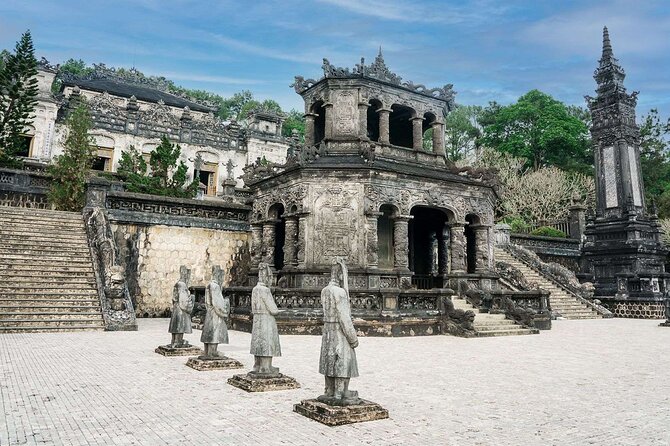
The afternoon continues to the tombs of Minh Mang and Khai Dinh. Khai Dinh’s tomb is especially different from the open, garden-like style associated with some other royal sites, while Minh Mang’s complex is known for its ordered setting. The schedule is tight, and the listed stop times are brief, so you should expect an overview rather than a detailed study of every building.
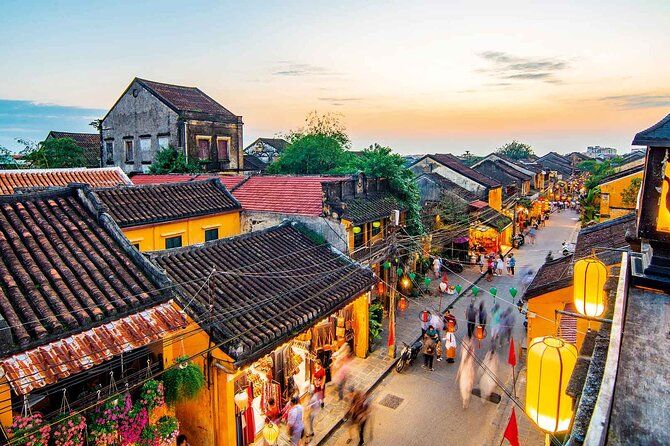
Day 10 brings My Son Sanctuary, a UNESCO World Heritage site linked to the Champa civilization. Afterward, you walk through Hoi An’s old quarter, with stops at the local market, Tan Ky Old House, the Fujian Assembly Hall, and the Japanese Covered Bridge.
Hoi An is a welcome change after several guided days. Days 11 and 12 leave you free to walk, shop, eat, and return to places that caught your eye. This is exactly the kind of unscheduled time that helps a long organized tour feel less mechanical.
Do not underestimate the value of those free hours. Hoi An is best enjoyed at walking speed, and a scheduled stop at every major sight can miss the pleasure of simply wandering its lanes.
Same place, a different way to unwind:
- Deep Muscular Therapy
★ 5.0 · 496 reviews - Hoang’s Spa for Relaxing Foot Massage
★ 5.0 · 82 reviews - Hoang Spa Nourishing Shampoo & Head Shoulders Face Massage
★ 5.0 · 58 reviews - Hoang Spa Thai Massage
★ 5.0 · 34 reviews
Days 12 to 15: Hoi An, Nha Trang, and real downtime
On Day 12, you have more free time in Hoi An before transferring to Danang airport and flying to Nha Trang. The transfer and flight consume much of the afternoon, so treat this as a travel day rather than another full sightseeing day.
Nha Trang supplies the relaxation promised in the tour title. Days 13 and 14 are set aside for the beach, with breakfast at the hotel and the rest of the day free.
This is a smart break in the middle of a demanding route. By this point, you will have dealt with Sapa walks, a boat cruise, Hue’s monuments, and Hoi An’s old town. Two open days allow you to rest instead of racing through another set of stops.
The details do not specify a particular beach hotel, optional water activities, or included beach equipment. That is fine if you want unplanned time, but ask about the hotel’s location and beach access. Those details will shape how convenient the rest days feel.
On Day 15, you have some free time before flying to Ho Chi Minh City. After hotel check-in, the evening is open for your first look at the city.
Days 16 to 18: war history and the Mekong Delta
Ho Chi Minh City sightseeing begins with the Notre Dame Cathedral and the Central Post Office. Both are architectural landmarks, and they sit close enough together to make a sensible morning pairing.
The War Remnants Museum changes the tone. Its exhibitions present the Vietnam War from a Vietnamese point of view and can be emotionally difficult. Give yourself time to process what you see, and do not expect a light sightseeing stop.
In the afternoon, you drive about 60 kilometers to the Cu Chi Tunnels. The tunnel system shows how people lived, moved, and fought underground during the war. The drive can be lengthy, but the site adds context that city museums cannot provide.
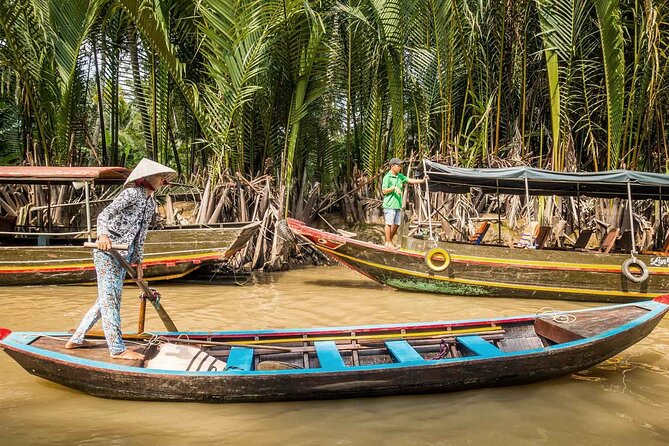
Day 17 moves to My Tho and Ben Tre in the Mekong Delta. You take a boat along the Mekong River, continue through narrow canals lined with coconut palms, and visit local workshops. The setting is rural and water-based, a useful contrast to the large cities earlier in the trip.
You then continue to Can Tho for the night. This overnight matters because the next morning begins around 6:30 am for Cai Rang Floating Market. The market is busiest early, when boats sell fruit and vegetables from the water.
An early start is the price of seeing the market at its most active. After cruising through smaller channels, you return toward Ho Chi Minh City in the afternoon. The trip gives you a quick but worthwhile look at delta life, though people wanting a slower rural stay may find two days brief.
Days 19 and 20: a gentle finish in Ho Chi Minh City
The final full day is free in Ho Chi Minh City. That is useful after the scheduled visits because you can choose your own pace. You might return to a museum, shop, eat, or simply take a break before flying home.
Day 20 includes breakfast and airport transfer, with free time before departure. The schedule does not include a farewell sightseeing program, so check your flight time and do not expect a final guided tour.
The free finish is a good design choice. It leaves room for delays and gives you a chance to buy gifts without carrying them through the rest of the route.
Meals, transport, and what the $1,699 covers
The package includes breakfast on 19 days, 11 lunches, and two dinners. That takes pressure off your budget, but it does not mean every meal is covered. Plan for some dinners, drinks, soft drinks, and snacks.
One domestic flight is specifically included, although the schedule also lists flights between Hanoi and Hue, Danang and Nha Trang, and Nha Trang and Ho Chi Minh City. Because the written details do not clearly match the number of flights, confirm exactly which air segments are included and whether airport taxes or baggage charges are covered.
Air-conditioned vehicles are included, along with guides and sightseeing tickets. That is valuable in a country where heat, traffic, and unfamiliar roads can make independent transfers tiring.
The cost is particularly attractive for a group that wants private rooms and organized movement without paying for a fully private tour. It is less compelling if you prefer choosing your own hotels, eating independently every night, or staying several nights in each city.
Who should book this 20-day Vietnam tour?
I would recommend it to first-time visitors who want to see Vietnam from north to south without managing the route themselves. It also suits families and small groups, especially since the operator has handled trips for groups of four adults and five children, as well as a group of nine.
It works best for people who can handle early mornings, frequent transfers, and a 12-kilometer trek. You should also be comfortable with a mix of group touring and free time, rather than expecting a private guide at every moment.
The customer service record is a strong point. Son and Tran were praised for prompt replies, careful planning, airport support, and staying available through a messaging chat. That kind of contact is useful when weather affects a cruise or a flight schedule changes.
Free cancellation is available up to 24 hours before the start time. Poor weather or failure to meet the minimum group size may lead to a different date, a different experience, or a full refund. The tour allows most people to participate, but the Sapa trek means you should be honest about your walking ability.
Should you book it?
Book this tour if you want a broad first visit to Vietnam, reliable coordination, private rooms, and built-in rest days. The route is ambitious but sensible, and the Halong Bay cruise, Hoi An free time, Nha Trang beach days, and Mekong Delta overnight keep it from becoming one long checklist.
Think twice if you want a slow trip, precise control over hotels, or long stays in fewer places. Before booking, confirm the hotels, the number of Halong Bay nights, the exact domestic flights, and the length of each Sapa walk. If those details suit you, $1,699 is a strong package price for 20 days of transport, sightseeing, meals, and support.
FAQ
How long is the Vietnam tour?
The tour lasts approximately 20 days, beginning with arrival in Hanoi and ending with airport transfer from Ho Chi Minh City.
What cities and regions does the tour visit?
The route includes Hanoi, Ninh Binh, Sapa, Halong Bay, Hue, Hoi An, Nha Trang, Ho Chi Minh City, My Tho, Ben Tre, and Can Tho.
Is accommodation included?
Yes. Accommodation in a private room is included. Specific hotel names are not provided in the tour details.
Are meals included?
Breakfast is included for 19 days, along with 11 lunches and two dinners. Tips, alcohol, soft drinks, and personal expenses are not included.
Is transportation included?
Yes. The package includes an air-conditioned vehicle, hotel pickup, transfers, guides, and a domestic flight. The listed schedule includes flights between several Vietnamese cities, so confirm which flight segments are covered.
How large is the group?
The maximum group size is 10 people.
Is the tour suitable for people who do not want strenuous activity?
Most people can participate, but Day 4 includes a trek of about 12 kilometers through Muong Hoa Valley. You should be comfortable with a full day of walking and uneven terrain.
Just added around Hanoi
- Wellness Detox Journey In Vietnam★ 5.0 · 19 reviews
- Mesmerizing Vietnam Wellness Tour In 11 Days★ 5.0 · 3 reviews
- Vietnamese Authentic Traditional Massage★ 5.0 · 4 reviews
- spa★ 5.0 · 2 reviews
- Ninh Binh 2 Days 1 Night with 4 Star Resort and Spa (Group 8)★ 5.0 · 24 reviews
- Traditional Vietnamese Massage Courses★ 5.0 · 2 reviews
- Unique massage★ 4.0 · 4 reviews
- Relaxing Package In 150 Minutes At Mf Boutique Spa★ 5.0 · 15 reviews
Hanoi Massage and Spa, compared.
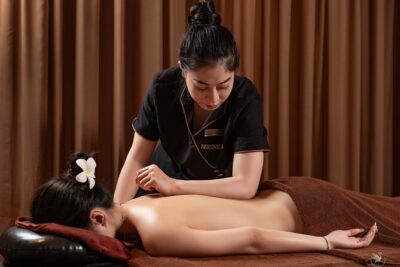
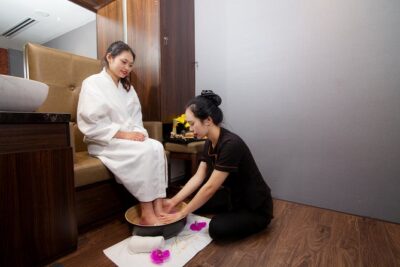
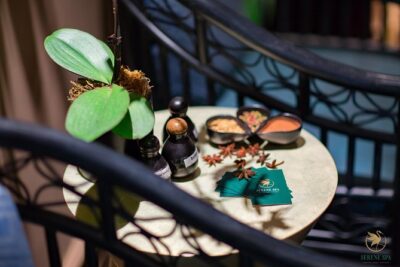


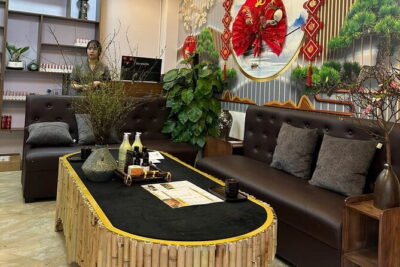
Hoang Spa Nourishing Shampoo & Head Shoulders Face Massage
Read our review →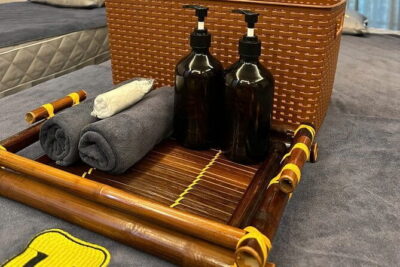
75 Mins Body Massage (Aroma/Vietnamese/Deep/Hot Stone)
Read our review →Where else this treatment appears